How to Plan Your Death | A Guide for Single Women

You know why you need to plan your death as a single woman. But do you know how? In part 2 of A Spinster’s Guide to Death, I’m going to tell you how to plan your death as an unmarried, childfree woman.

Why This Is a Must-Read Blog

Let me be clear. You could go get a book on estate planning to learn how to plan your death. In fact, just about any estate planning book would give you more of the nitty gritty details than this blog post will. The only reason I think I’ve got something of value to say on the matter is because I’m writing specifically for single, childfree women.

The solo death is a sad one in our society. It’s so feared that some of us prefer to ‘settle’ than to risk dying alone. But let me tell you, it’s all a sham. If you’ve ever visited a nursing home, you know that it doesn’t matter how many husbands you have or babies you pop out. Anyone can die alone. And, in my opinion and individual experience, it’s the women who depend on others to care for them in their old age who are most likely to end up abandoned.

Caitlin Doughty talks about the fear of dying alone in her “Ask a Mortician” YouTube series:

As a solo woman, you actually have an advantage when planning for your death. And not just because you get to avoid the drama of leaving your estate to your children or making sure your spouse doesn’t get your inheritance. It’s because you get to make your own decisions instead of hoping someone else will do everything for you. As I mentioned in Part 1, there’s a lot of comfort in that.

How to Plan Your Death

When it comes to estate planning as a single woman (if you’re thinking, “Estate planning? I don’t have an estate,” listen. Even if you’re poor as a church mouse, you’ve got to plan your living will and make arrangements for your pets and your own funeral. That’s estate planning), there are really only three main documents you need to prepare.

But before we dive into this, I recommend you:

  • Make a cup of tea
  • Get a notebook or open a word file
  • Sit down in bed

Learning how to plan your death isn’t going to be as nerve-wracking as you think. I promise. Planning your death is like doing your budget: You can make yourself sick worrying about it, but once it’s done you feel far more in control of your life (even if your checkbook is in the red).

How to Plan Your Death | A Guide for Single Women

{Let me put a quick disclaimer here. I am not an attorney, a financial adviser, or involved in the death industry. This guide is simply meant as an introduction to and a jumping off point for planning your death as a single woman.}

#1. Advance Directive (Living Will)

No matter who you are, you’ve got to arrange your advance directive. But if you’re a single woman, you’ve really, really got to set up your advance directive. I talked about why this is important in Part I, but here’s a quick recap: You can’t just depend on your (non-existent) spouse to figure out your wishes once you’re incapacitated. For that matter, you can’t really count on your parents or next-of-kin to do what you want, even if you have made your wishes clear (and let’s be honest, most of us haven’t). I don’t know about you, but I don’t want to be in a coma while my family (including those members who don’t like me) squabble about whether or not to pull the plug. That is my decision.

#2. Pet Trusts

Pet Trusts | How to Plan Your Death

I wish I could tell you I’ve cracked the code on writing water-tight pet trusts but… I can’t. The truth is they’re complicated and they vary from state to state. But if you’re not familiar with the concept, here’s the jist of it.

Setting up a trust is kind of like taking a little piece out of your estate and setting it aside. When you die, anything that’s in a trust can go to whomever you’ve left it to right away. It doesn’t have to go through probate, which, in the case of a pet trust, means your pet isn’t hanging out in limbo.

What makes pet trusts a bit trickier than a money-only trust is that you’ll probably want to include your pet (legally considered a piece of property), money (if you have it) and some explicit instructions on who gets the money and how they can use it. Let me show you a few scenarios.

Scenario 1

Let’s say your best friend has agreed to take care of your cat should you die. You want to make sure your cat gets the right treatment, so you figure how much money it’ll take to care for your pet (food, grooming, vet bills, etc) and include that in your pet trust. You decide to name an executor (usually a lawyer) to be responsible for the money. The executor distributes the money in yearly or monthly increments instead of giving it to your friend in a lump sum. You include specific details regarding how often your cat should be taken to a vet, what type of exercise she’ll get, and what kind of food she’ll eat.

Scenario 2

Now let’s say you have a parrot who’ll likely outlive you. You can’t leave him to a friend, because your friends are all close to your age. You decide to make a particular bird refuge the beneficiary of your pet trust upon your death.

Then you change your mind and decide that, if you die young, your friend will take care of your bird until she’s unable to. You include instructions in the trust stating that your bird will go to the bird sanctuary when your friend can no longer care for him.

You can do any and all of what I’ve just described. Right down to deciding which brand of food you want your pet to eat, if you really want to. However, I don’t recommend trying to set up a pet trust, even a simple one, without a lawyer. It’s not a DIY kind of thing.

#3. Burial and Funeral Arrangements

How to Plan Your Death | A Guide for Single Women

Choosing what becomes of your remains takes a huge weight off of your surviving friends and relatives. It can also give you a sense of peace. This information is often included in your advance directive or your will. However, you can go so far as to purchase a spot at the funeral of your choice and sometimes pre-pay or your funeral service.

The natural cemetery I’ve chosen for myself doesn’t offer pre-payment (known as a pre-need account), but they do have a form future corpses can fill out. I’ve got a copy of mine with my advance directive. Because it’s a natural cemetery, I have no casket to buy and no embalming or cremation to pay for. I just have to make very clear guidelines in my advance directive about what may and may not be done with my body. For example, my body must be refrigerated (not embalmed) and transferred across state lines to a funeral home that works with the cemetery.

It seems a little complicated, but it’s completely do-able.

How to Set It All Up (Death Planning Resources)

Okay, so now you know what you need. Now how do you get a hold of these forms and make sure they’re legitimate? I’m glad you asked.

Online Legal Forms

Websites like Legal Zoom and Rocket Lawyer are inexpensive sources for all of your death planning forms. If you use these, I highly recommend taking your finished forms to a lawyer to have them look over everything. It’s less expensive to pay for a lawyer’s seal of approval than it is to have them draft the documents themselves.

Everplans

Let me say right off the bat that I’ve never used Everplans and don’t know whether this is a worthwhile subscription service. However, they do have some free resources, include advance directives by state. They offer to “securely store wills, passwords, funeral wishes, and more in your own secure and shareable vault.” Have you tried them? Let me know what you thought in the comments below.

Local Lawyers

They’re much more expensive than the resources listed above, but they’re also much more reliable. If you have the money to go to a lawyer and have them arrange your will and trusts, go for it.

You can also always call a funeral home and ask them how you can set up a funeral plan with them. Don’t underestimate the power of simply asking questions, even on a macabre topic like death planning.

How to Plan Your Death Day

Everything I’ve talked about in this post deals with what happens after you die. But we can’t have a full discussion about how to plan your death without talking about your dying process. This is the part that scares people. This is the reason that people marry when they probably shouldn’t and have kids that they don’t really want. And not just single women, but the majority of all human beings. In Part 3, I’ll get into how to plan your death process.

Remember, none of this is as scary or overwhelming as it first seems. If the thought of dying alone makes you feel uncomfortable (or terrified), come back next week.


How to Plan Your Death | A Guide for Single Women

Why You Need to Plan Your Death | A Guide for Single Women

If you’re a single woman, you need to plan your death.

Actually, if you’re anyone you need to plan your death. But this post is directed specifically at solo/single women. The Spinster’s Guide to Death is a 4-part series on (you guessed it):

Death and the Single Woman

The fear of dying alone has prompted many a single woman to settle for a less-than-ideal partner. It’s like the ultimate bad death, next to being horribly murdered.  We see it on TV, read about it in the news, and shudder.

I’ll talk more about this fear in parts 3 and 4 of this series. In this post, I’m going to focus on the two main reasons you need to plan your death:

  1. It’ll bring you peace of mind.
  2. It’s your responsibility, not your family’s.

Let me explain these two reasons in a little more detail.

Why You Need to Plan Your Death | A Spinster's Guide to Death Part 1

The Comfort of Planning for Death

When I was younger, I came across Pearl S. Buck’s The Good Earth. The story follows a Chinese peasant family before World War I. I loved the book, but was struck by the strange way they handled death. When one of the characters is dying, her husband buys her a coffin and sets it in the room where she can see it. The sight gives her great comfort.

This raised a few questions in my American, 90s kid mind:

  • Wouldn’t it have been more loving to insist she’d get well than to admit she was dying?
  • Even if denial wasn’t an option, why put the coffin—a constant reminder of her impending death—right in front of her?
  • Why would the sight of one’s own coffin comfort someone who didn’t want to die?

It would take years for me to begin to understand how the sight of one’s coffin could be a source of comfort. The culture in the novel’s rural Chinese village was extremely different from the one I grew up in, where death was almost never mentioned and certainly never seen. There, as in many societies in many different times, death was not something that could be ignored. It was the only sure thing in life.

The dying woman in the book knew she was dying, and so did everyone else. Rather than try to comfort her by denying this fact, they comforted her by showing her that she would have a good death. Her coffin was paid for. She would be buried properly and have a proper grave that her family would visit. She didn’t have to worry about what would happen to her remains—and by extension her soul—after her death.

{Psst! You’re entering the part of the post that contains affiliate links to death-positive resources. Please read my affiliate disclaimer here.}

The Discomfort of Stranger Danger Death

Why You Need to Plan Your Death | A Spinster's Guide to Death

In her bestselling book, Smoke Gets in Your Eyes & Other Lessons from the Crematory, mortician Caitlin Doughty talks about listening to people’s fears about what will happen to their bodies after they die.

One woman called to ask if bodies were kept hanging on meat hooks in the refrigerator like sides of beef. An enraged gentlemen informed me that we shouldn’t be charging or a sea scattering because all that meant was “dumpin’ the ashes in the toilet with a packet of salt and flushing.”

It broke my heart to hear them, even the ones who were screaming at me. Holy crap, you’ve been thinking that? I thought. You think you’re going to die and be hung on a meat hook before being thrown into a bonfire of corpses and flushed down the toilet?

Doughty finds that the more straightforward she is about the decomposition, embalming, and cremation process she is—even the indelicate parts—the more relieved people are. It reminded me of my teenage curiosity about death, which ultimately led me to the goth subculture. I’d just wanted to know about the only guaranteed part of my life. The part no one (except the goths) ever wanted to talk about. I wanted to pull back the dark overcoat and see what this lurking stranger looked like underneath. And once death wasn’t a stranger, she really wasn’t so bad.

I mean, have you met Neil Gaiman’s Death? She’s rad.

It’s Time to Take Responsibility for Your Death

I used to say, as many folks do, “I don’t care what my family does with my body. They can dump in the trash for all the craps I give about it.” But that was before I really embraced the solo life. As a solo woman in my 30s, everything in my life is my responsibility. And that includes my death.

Why You Need to Plan Your Death | A Spinster's Guide to Death | Image by jeffjuit

I came to realize how irresponsible it was to leave everything for my surviving relatives to take care of when I began working with estate accounts. People would come in to the financial office, half-dazed by the shock of a death, trying to understand legal issues most people can’t interpret without a lawyer. Arranging for the simplest funeral was often overwhelming. Basically, everything involved with the legal side of death was foreign, expensive, and confusing for the survivors.

The other factor was that I had actually started to care about what happened to my body. When I first saw the Bios Urn, I remember thinking, “Oh wow, my death could actually do some good. I could be part of the circle of life for real.” Later, when I started watching Caitlin Doughty’s Ask a Mortician YouTube channel (which later led to me buying her books), my eyes opened to the realities of the death industry. I didn’t want my body to slowly liquefy in an anti-decomposition lead box. In fact, I found out that what I really wanted was to be laid to rest in a conservation cemetery in my home state. Imagine me, the woman who once thought a Hefty bag on the sidewalk awaiting the trash compactor would be a fine funeral, becoming sentimental about death.

The Spinster’s Relationship with Death

Okay, so what does all this have to do with being single and/or childfree? A lot, actually. Here are the main reasons you, as a solo woman, need to plan your death:

  1. You can’t (and shouldn’t) depend on someone else to do it for you. You don’t have the luxury of assuming your spouse or child will handle things for you.
  2. Your death plan includes your life plan. As someone without a spouse or kids, you’ve got to set clear guidelines for what your next-of-kin should do if you’re incapacitated.
  3. Your death plan matters. Like I said, I’ll go into this more in the third installment of this blog series. For now, I’ll just say there’s a reason so many people fear dying alone.

Let’s look at these in a bit more detail.

#1 – You can’t (and shouldn’t) depend on someone else to plan your death.

If you aren’t married and don’t have kids, your next-of-kin is probably a parent. If they die before you, it’ll be your next closest family member. Does that person know what your wishes are? Do they want that responsibility? Do you want them making those decisions for you?

Don’t put a loved one in a situation where they have to grieve for you while wondering what you would have wanted and trying to figure out how to handle your estate. It’s not loving, and it’s not good for either of you. Remember, you can’t always count on a quick and easy death. Do you want your estranged aunt to be the one who decides whether or not to pull the plug?

#2 – Your death plan includes your life plan.

As stated above, you can’t always count on clean, sudden death. If you’re in an accident and can’t make decisions for yourself, someone else is going to make them for you. That is, unless you plan your death and have a clear advance directive in place. This form, which I’ll talk about in detail in the next post, tells healthcare providers what your wishes are should you become incapacitated.

#3 – Your death plan matters.

Again, I’ll talk more about why this is so important in the third post in this series. Sometimes death carries you off in the blink of an eye. Other times it’s a process. You deserve to be comfortable and safe during that process. Additionally, the fear of what that process might look like for someone who’s “alone” has been the foundation of many fear-based decisions.

Hopefully by now I’ve convinced you that you need to plan your death. If you’re ready to learn more, subscribe to The American Spinster email list to be notified as soon as I post the next installment.

In the meantime, cozy on up to your own mortality by visiting the Ask a Mortician YouTube channel.

Why You Need to Plan Your Death | Spinster's Guide to Death, part I

Spinster: Making a Life of One’s Own | Book Review

Spinster: Making a Life of One’s Own is written by Kate Bolick. It’s categorized as Social Science—Feminism & Feminist Theory, but it’s more than a sociological text. It’s a biographical, autobiographical, literary theory, and psychology text. Spinster asks the question, “What does it mean for a woman to truly live her own life?”

This question comes on a very long history of women sacrificing their own wants and desires to fulfill the needs of their children, husbands, parents, and society. In the past, accepting a marriage meant becoming a mother—something that would either end or limit a woman’s career. Bolick’s book shows that many spinsters might have been happy to marry (and some ultimately did), but refused because they were unwilling to subjugate their lives to the lives of others.

In modern American culture, women can marry and retain their rights, money, and careers. We can choose not to have children. What, then, is a modern spinster? Bolick weaves her decades-long search for the answer in with the lives of five female writers who chose spinsterhood over marriage.

{No spoilers, but I highly recommend this book! So expect to see some affiliate links in this post. You can read my affiliate links disclaimer here.}

The American Spinster’s Thoughts on Spinster

Normally, when people say a book “gives the reader a feeling of intimacy,” I read, “The author flung her most private moments onto the page in a crass manner, hoping to sound salacious.” That’s definitely not what happens in Spinster: Making a Life of One’s Own. Yet the book was truly intimate. By the time I’d finished it, Kate Bolick might have been a close friend I’d grown up with.
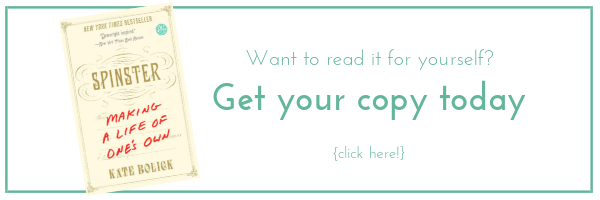
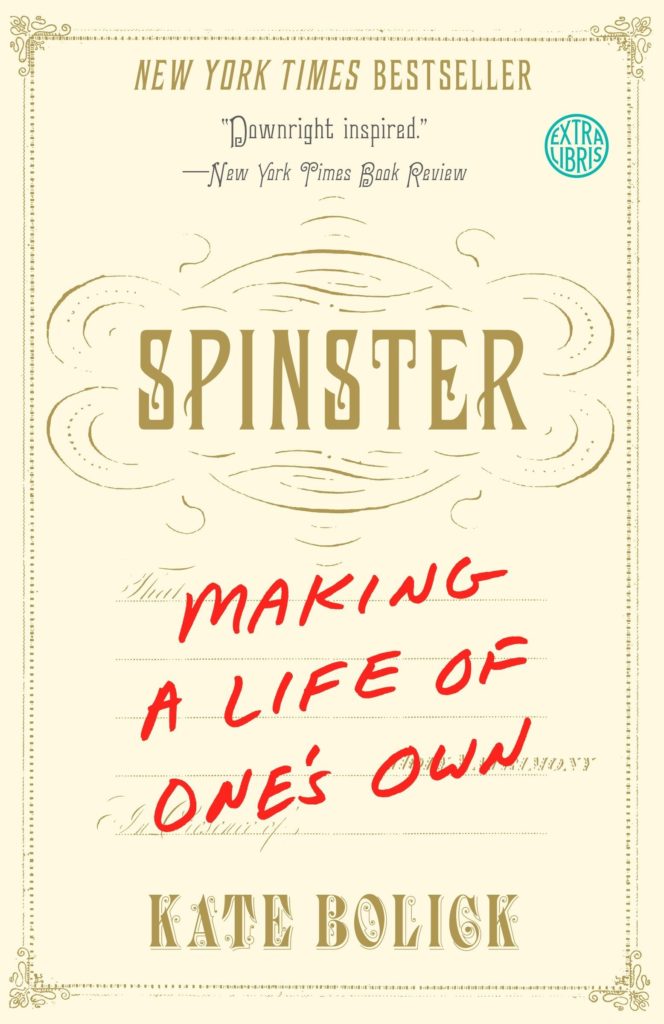

She skillfully introduces her relationships (sexual, platonic, and familial) alongside the biographies of the literary spinsters who’ve influenced her. It’s not just a historical, nonfiction account of women who pioneered the spinster life in the United States. It’s also an account of how the author responded to their work and their lives. The result is an intimate, informative, thought-provoking look at the innate desire to truly be oneself.

Spinster: Making a Life of One's Own, by Kate Bolick

Should you read Spinster: Making a Life of One’s Own?

Throughout the book, Bolick deals with what she calls “the spinster wish,” which is “shorthand for the extravagant pleasures of simply being myself.” She struggles to understand why she isn’t happy being in a relationship with a man who seems like her perfect match. A man she’s in love with. Time and again, she turns to her group of five spinster writers from the 19th and 20th centuries.

This book is perfect for anyone:

  • Interested in women writers, feminist theory, or women’s history
  • Struggling  to live on her own, financially or emotionally
  • Living in, or thinking about living in, a living-apart-together relationship
  • Harboring a secret “spinster wish”

Even if you don’t see yourself as a spinster (or even single), it’s still an inspirational look at, as Bolick writes, “holding on to that in you which is independent and self-sufficient, whether you’re single or coupled.”

Spinster: Making a Life of One's Own, by Kate Bolick


Looking for other great books about the solo lifestyle? I’ve got a whole library.

What Is Living Apart Together?

Longtime readers know that I’ve been in a living apart together situation since before I started this blog. In fact, it was my revelation about the LAT lifestyle that led me to start this website in the first place. But somehow, I’ve never written a single article about it. In this post, I’m going to give you an overview of the living apart together lifestyle, including its pros and cons.

What is Living Apart Together?

Living apart together is exactly what it sounds like. Two people are in a relationship, but they live separately. This can include people who are:

  • In a long-distance relationship
  • Living nearby but in separate homes
  • In a relationship but co-habitating with others

Living apart together couples can be married or legally unattached. Not everyone who lives together apart does so by choice, but the term LAT is most often applied to those who do. No two couples’ reasons are exactly the same. LAT is a broad term that covers a very wide range of relationships and reasons.

What Is Living Apart Together? | The American Spinster

How I Started Living Apart Together

When I first met my LAT boyfriend, I held some pretty traditional beliefs about relationships. I was 25, and had never been in a long-term romance before. So, a couple months later, I was pretty perplexed to find out that he had no desire to move in with me. How could he be serious about me, and our relationship, if he didn’t plan to… you know… get serious about it?

After some honest discussions, I realized that it really wasn’t a reflection on me. He just didn’t want to live with anyone. Ever. Even me.

I was glad that he’d been so honest with me, but I really didn’t know how to take that information. Wasn’t that sort of thing a deal breaker in normal relationships? Weren’t relationships about sacrificing the perks of the single life?

30 Days to LOVE Being Single | FREE Email Course

The Appeal of Living Apart Together

I was wondering if I should stay in this relationship when I was out running errands one day. At the bank, I overheard a woman talking about her upcoming divorce, and how she was never going to get married or move in with anyone again. “Now I may have a boyfriend,” she’d told the teller, “But he’ll live at his house and I’ll live at mine. I’m not doing that again.”

After hearing her, I remembered just how many other times I’d heard women say similar things. Nearly every woman I knew who had a break up after 40 felt the same way. Slowly, something dawned over me. It was the idea that retaining an independent residence might not be a bad thing.

I had only been living on my own for a few months by this time (I’d always lived with roommates or family). And I was really loving it. Was the only reason I wanted to get married and move in because I thought I was supposed to?

The Benefits of Living Apart Together

After seven years of living on my own while in a committed relationship, I’ve discovered the following perks of the LAT lifestyle:

LAT allows individuals to have their own space for reflection and expression

In Spinster: Making A Life Of One’s Own, Kate Bolick writes of an early long-distance relationship, “The far-off security of a boyfriend was almost better than having him nearby.” She enjoys her solitude and her space for individual expression. This, in my experience, is the greatest boon living apart together has to offer.

What is Living Apart Together? | The American Spinster

It encourages downtime and prevents argument escalation

Many LAT couples also say that it helps their relationship. Ann Pachett, author of This Is The Story of a Happy Marriage, says that being able to go home to her own house and cool off after an argument saved her living apart together relationship. So many couples’ arguments come from simply spending too much time together. The regular time apart that an LAT lifestyle offers mitigates that.

It extends the “dating” and “honeymoon” stages indefinitely

One thing that most of my newly married or newly living together friends say is that they miss when they and their partners were dating. Even before having kids, living in the same house and sleeping in the same bed without getting to spend any real amount of quality time together takes a toll on the relationship. They talk about how difficult it is to get excited to see their partner at the end of a long day, and how disappointed they feel crawling into bed to get a few hours’ sleep before tomorrow’s alarm goes off.

These friends didn’t start working more hours when they moved in together. They actually had more free time, since they didn’t need to make time to see their partner on their days off. And, though I don’t have any stats to back this up, my hypothesis is that that’s the problem.

Scheduling time to see my partner is sometimes stressful. But when we’re together, we’re each other’s only priority. I think it’s better than being physically near each other every day but mentally distant. We have quality, not quantity, time.

What Is Living Apart Together? | The American Spinster

Whatever the specifics, living-apart-together is a growing trend.

The Cons of Living Apart Together

Of course, living apart together isn’t all roses and sunshine. There are definite trade-offs with the traditional white picket fence lifestyle. For instance:

Living as a single person is expensive

Couples living together can combine their assets, cutting rent and Netflix bills in half and decreasing costs on utilities. LAT couples have all the same expenses as single people living on their own (unless they choose to share a Netflix account, of course).

The LAT lifestyle is unusual

When you’re in a living apart together relationship, you’ve got a lotta esplainin’ to do. Friends, family, and coworkers will constantly ask you when you’re going to get married. I’ve seen so many people quickly try to cover their shock with an expression of polite interest when they find out my boyfriend and I have been dating for seven years and still aren’t living together.

It can be lonely

This, I believe, is partially due to the feelings of weirdness that come from living an atypical lifestyle. But it can also come directly from the LAT lifestyle itself. The other side of having space for solitude and downtime is that there’s no one on-hand whenever you need little hug.

What Is Living Apart Together? | The American Spinster

Is Living Apart Together Right for You?

Clearly, living apart together isn’t for every couple. But, for some couples, it provides a healthy way to be part of a relationship without needlessly sacrificing their beloved solitude. What are your thoughts? Do you have any questions about the LAT lifestyle I didn’t cover here? Let me know in the comments below.

What Is Living Apart Together? | The American Spinster

The images in this post are provided by Kaboompics.

Star Trek and Spinsters

Are intentionally single women selfish for caring more about their own development than their potential roles as wives and mothers? Not according to the future as seen in Star Trek.

Star Trek: The meaning of life in the 24th century

I’m a Star Trek fan. It’s no surprise, as my dad’s been a fan of the series since the very first episode aired. One of my earliest memories was of watching an episode of Star Trek: The Original Series on TV. I didn’t even know what was going on in the show, because I couldn’t talk yet.

Growing up in the ’80s and ’90s, I watched a lot of The Next Generation. Captain Picard, fictional though he is, is still one of my heroes. As I got older, I began to appreciate the show’s messages about humanity’s future.

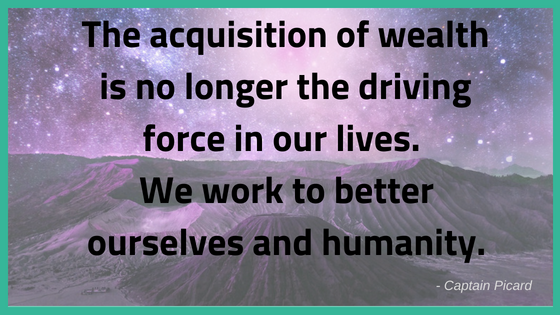
Something that always seemed to make sense to me was the fact that, in the 24th century, no one used money. Captain Picard explains this in the film First Contact by saying, “The acquisition of wealth is no longer the driving force in our lives. We work to better ourselves and humanity.”

Star Trek and Spinsters | The American Spinster

Though the show’s creator, Gene Roddenberry, didn’t write this line, it sums up his beliefs pretty well. In his future, humans had continued to evolve socially and morally. We no longer gave into our baser, beast-like urges. Our social development had instead caught up with our biological evolution and our technological advancement. He believed we would outgrow our old customs that had served our ancestors, and create a world where “there will be no hunger, there will be no greed, and all the children will know how to read.”

Spinsters and Star Trek

It’s a lovely vision, but how does it connect to the solo lifestyle? Well, it’s not that we singles have nothing better to do than sit at home alone and watch Star Trek reruns on Netflix, if that’s what you were thinking. Not that there’s anything wrong with that. It’s that the reasons women are staying single longer line up with the idyllic future Gene Roddenberry imagined.

Star Trek and Spinsters | The American Spinster

Marrying for Survival

Recently I shared an article on The American Spinster’s Facebook page about the dropping marriage rate among Chinese adults. The views expressed in the article, both by the women and their parents, are very similar to those of their American counterparts. Essentially, the interviewees said that urban women are focusing on their personal development instead of immediately diving into the baby-producing traditional lifestyles their parents had.

“It’s not that successful women don’t want to marry, it’s that making money makes us pickier,” says the successfully employed Dai Xuan.  “Before, in China, you married to survive. Now I’m living well by myself, so I have higher expectations in marriage.”

The often-scapegoated Millennials (now in or approaching our 30s) are also moving away from marriage for survival. Now that employers can’t legally discriminate against women, we can earn our own livings. We’re marrying later—if at all. And when we do marry, it’s less frequently due to financial needs than it was for previous generations of women.

Obviously that’s a broad statement which doesn’t apply to everyone. Discrimination still exists, and many women in the U.S. are still in cultural and financial situations that lead them to marry to survive. I’m not saying we’ve moved past it. But we are moving past it.

30 Days to LOVE Being Single | FREE Email Course

Focusing on Ourselves

One of the common criticisms intentionally single women face is (you guessed it) that we’re selfish. All we care about is money and partying. Our lives are examples of pure hedonism. Etc., etc.

Despite the fact that most single women living alone actually spend most of their waking hours working (living alone is expensive, after all), this view is flawed for another reason. It equates focusing on oneself with selfishness and depravity. And while prioritizing your own wants over the needs of others is often selfish, prioritizing your needs over the wants of others is not. No matter how much your mother wants her some grandbabies, your needs are still more important.

Why? Because Star Trek says so.

Unlike the classic (and deeply meaningful) scene in Rocky, where Rocky tries to explain that he and his new girlfriend Adrienne “fill gaps” in each other, in Star Trek‘s couples aren’t two broken individuals coming together to create a whole. They’re two whole people coming together to create a couple. Pairing up is never a means of salvation (at least among Federation characters) like it is in so much of 20th and 21st century media.

But in order to have two whole people to start with, you have to have a society that encourages personal growth and self improvement. Captain Picard says that in the 24th century, we work to develop ourselves. Humans just 300 years from now will live their lives with the sole purpose of reaching their fullest potential.

Staying Single

When women (and men) elect to remain single and focus on themselves, the result is not unhampered debauchery. It’s a generation of more conscious and mindful individuals.

Star Trek and Spinsters | The American Spinster

This is even true in subcultures that still see marriage as the ultimate goal. If you go to any Christian single woman’s corner of the internet, you’ll find pins, posts, and videos about becoming a stronger, more capable woman while you wait for your spouse to arrive in your life. That’s huge. The idea that the best way to spend one’s time as a single Christian woman is not to make yourself meeker and more malleable, but stronger and more capable is an incredible change (and toward the better, in my opinion).

We are moving toward Gene Roddenberry’s ideal of a future where every human being is whole and always striving to learn more; where we work every day to better ourselves. This kind of world has no room for meaningless customs that no longer serve us. It certainly has no room for institutions that exist only as a means of survival. If marriage is going to continue to exist (and Star Trek seems to think it will), it has to become a partnership between two whole people who don’t need one another’s resources, but want one another’s company.

Star Ship Captains Fly Solo, Too

It’s interesting to me how many of the main characters on Star Trek are single. Captains Kirk, Picard, Janeway, and Archer are all unmarried*. Many members of the bridge crews also remain single throughout the series. When we do see marriages among the Federation crew, such as that between Lt. O’Brien and Professor  Ishikawa, they’re never formed out of necessity or for emotional healing.

This is excepting one-episode instances, such as The Paradise Syndrome, in which Kirk loses his memory, becomes married and widowed, and never mentions it again.

If you’re single, just remember: You’re in good company. If the captains of the U.S.S. Enterprise (and Voyager), living in a Utopian future, can focus on their careers without being sad and shallow, so can you.

You’ve got one life, and there’s nothing wrong with using it to develop your own fullest potential.


If you want to find out how you can reach your full potential at work, check out 3 Ways to Rock Your Career as a Single Woman.

Star Trek and Spinsters | The American Spinster

Housewarming Gifts for Single Women

Is a young woman in your life getting ready to strike out on her own? Here’s The American Spinster’s Top 5 list of best housewarming gifts for single women.

The Bachelorette Pad Housewarming Party?

In the world of the white picket fence, young adults get married, move into their first home, and receive housewarming gifts from their friends and loved ones. But today, more and more people are going solo; that is, deciding to live alone. What do we do then?

Why isn’t moving out on one’s own treated with the same congratulations and support as is moving in with a partner? Living solo is expensive, and single women living alone could use a little financial help in the form of some thoughtful housewarming gifts.

Housewarming Gifts for Single Women | The American Spinster

When I sat down to write this article, I thought, “Psh. Single women need the same things that married couples do!” But the more I thought about it, the more I realized there are a few important things to keep in mind when buying housewarming gifts for single women.

{This post is filled with items I highly recommend. That mean it contains carefully selected affiliate links. Please read my full affiliate links disclosure here.}

The Best Housewarming Gifts for Single Women

The last thing you want to do when you’re giving someone housewares is to decorate their home for them in a style they don’t like. One way to get around this is to take your solo woman to Pier 1 Imports, Rooms To Go or some store like that. Pay attention to what she seems to like. Of course, if you can, the best thing is to simply ask what they want. But if that’s not possible, try the following.

1. Security Bar

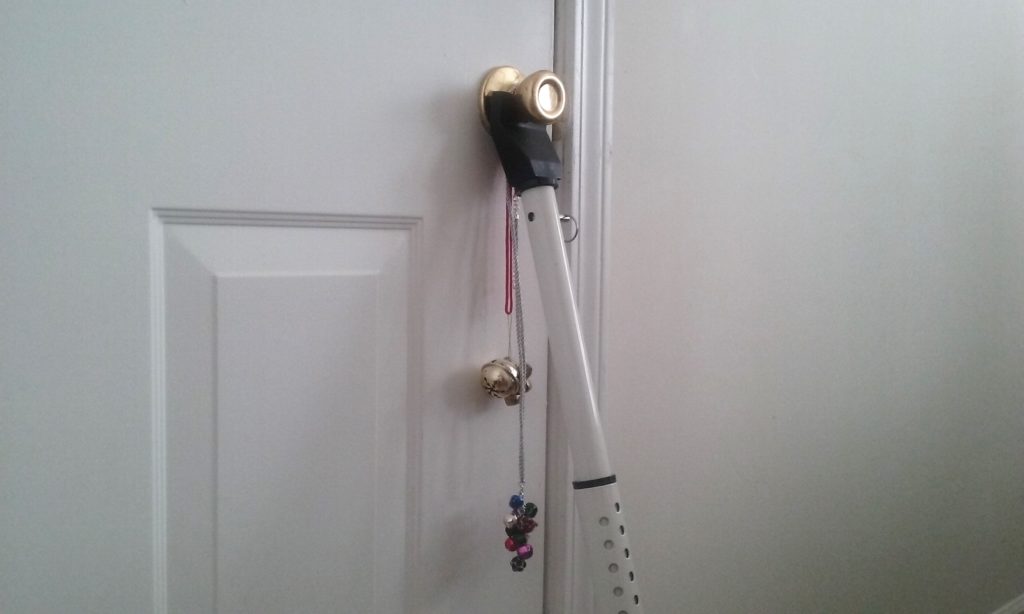
I’ve used this exact bar every day for the last 7 years, and I can’t recommend it enough.

Housewarming Gifts for Single Women | The American Spinster

After a maintenance worker let himself into my apartment while I was sitting at my computer in my robe, my dad bought me this Master Lock Security Bar. Even when someone has a key, this bar keeps the door securely in place.
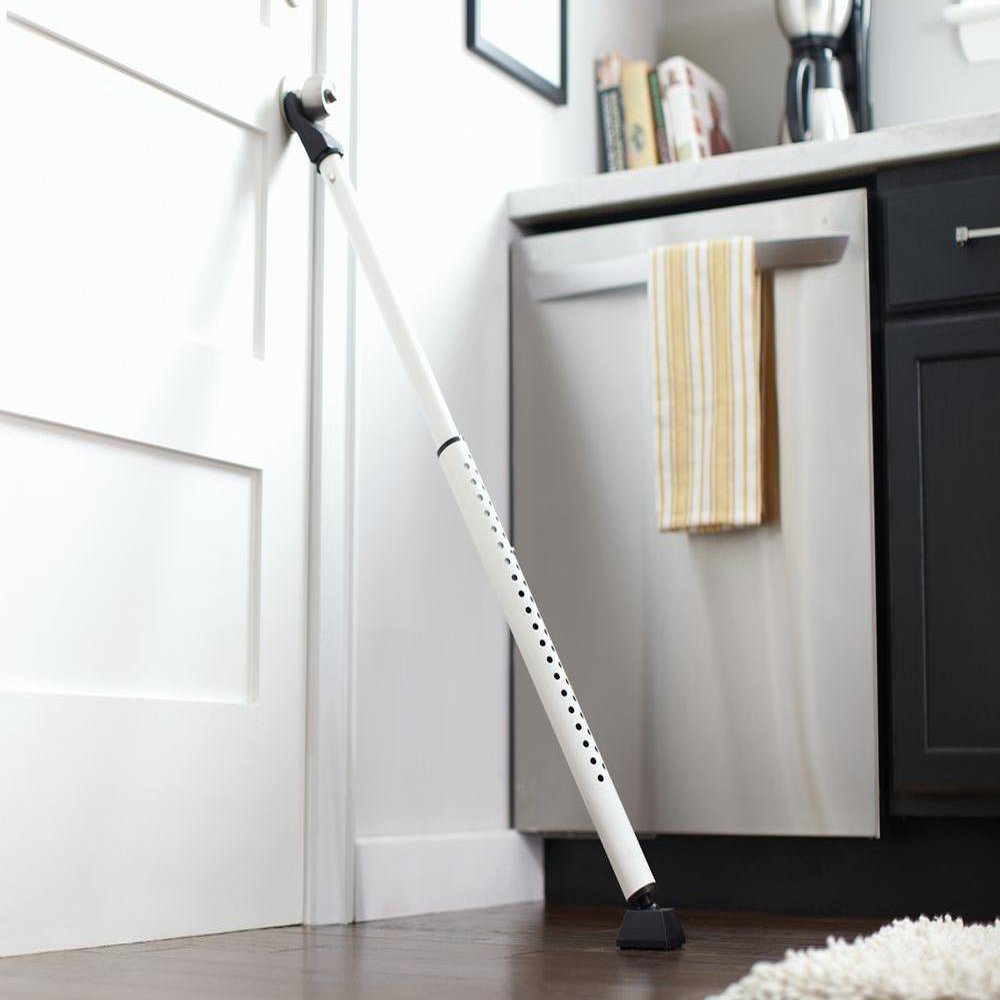
This is great for anyone, but especially people living in a rental, or anywhere where someone else has a key. If you’re worried about your solo woman living on her own, give her this security bar.

Housewarming Gifts for Single Women | The American Spinster

Master Lock Security Bar, Adjustable Door Security Bar – $16

2. Cookware Set

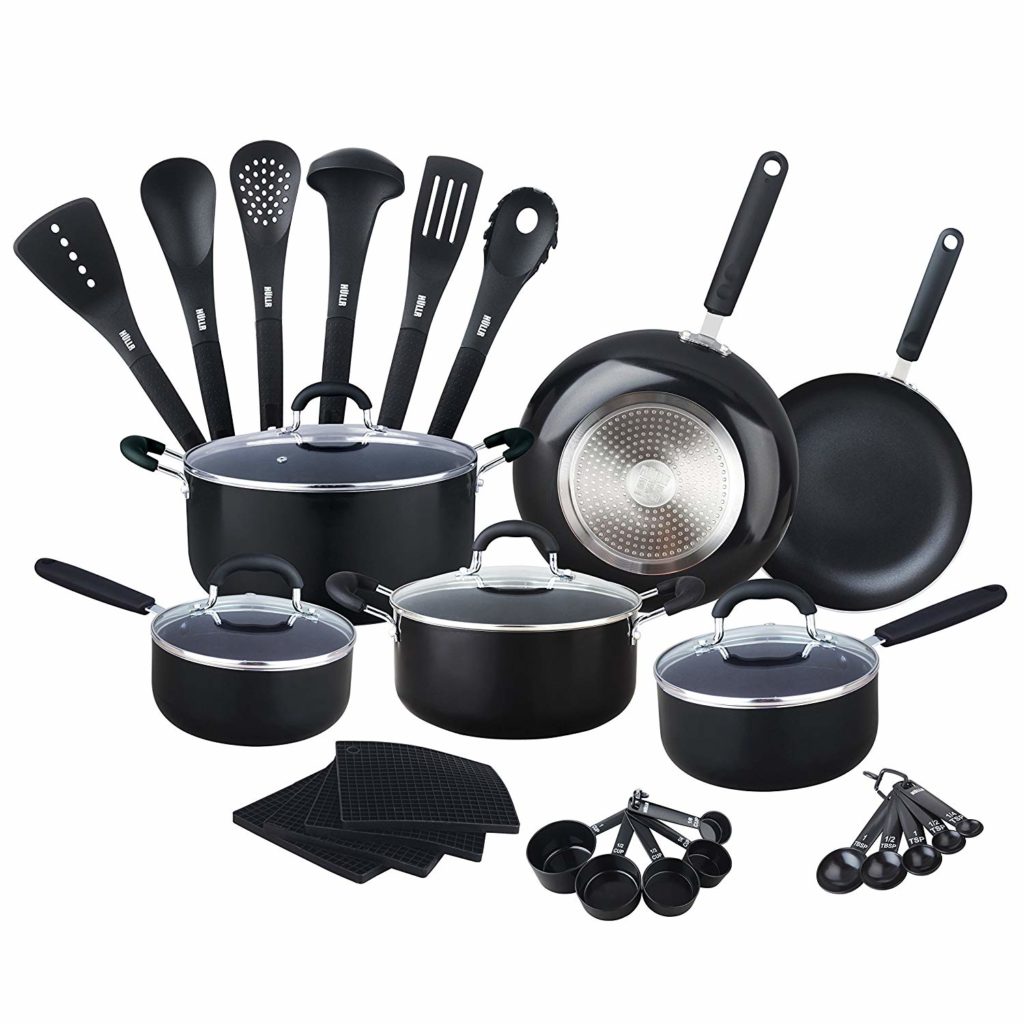
Even if your solo friend or family member doesn’t really cook, she’ll still need a few pots and pans.

Housewarming Gifts for Single Women | The American Spinster

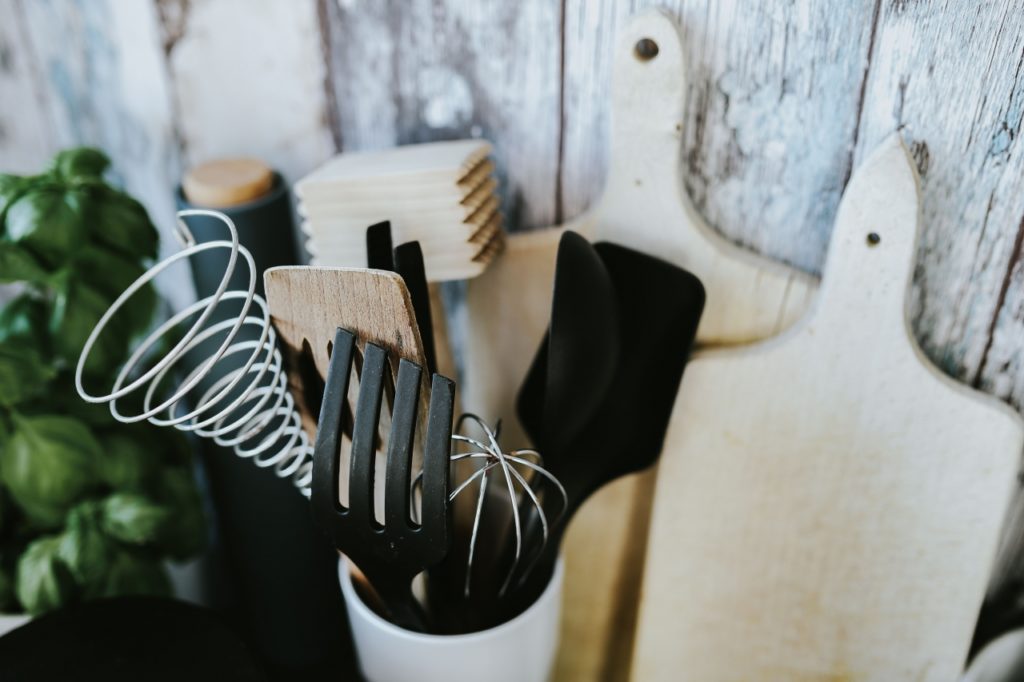
I don’t own this particular set from HÜLLR, but the one I have is very similar. It has two saucepans, two pots, two frying pans, plus measuring cups, pot holders, and all the basic cooking utensils. It’s also a pretty good deal at approximately $50.


Housewarming Gifts for Single Women | The American Spinster

HULLR Aluminum Nonstick All In One Kitchen Cookware Set – $50

3. Dining Ware

While we’re talking about cookware, we might as well look at dining ware. When I moved out, I decided I didn’t want a set of dishes. I wanted a to scrounge my dining ware from thrift stores, making sure no two plate were the same. And while this boho aesthetic can be fun, it’s also pretty inconvenient. If I’d thought about how I was going to store and use these plates and bowls—all of various sizes and shapes—I’d have picked something a bit more uniform.

Housewarming gifts for single women | The American Spinster

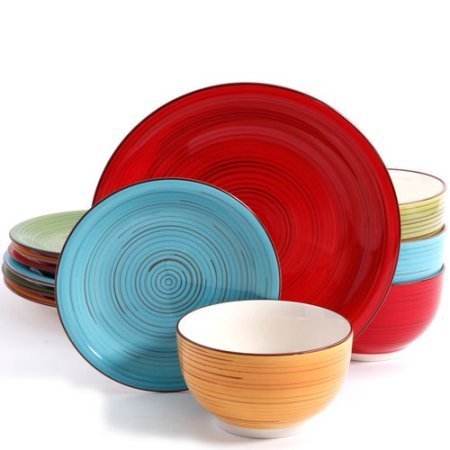
Knowing what I know now, I think this set from Better Homes and Gardens is just about perfect. I like this set because it’s not just a bland white but it’s not too stylized. It has a variety of colors in a fairly neutral design. Best of all, it’s something your single family member can easily add to later on.
Housewarming Gifts for Single Women | The American Spinster

Better Homes and Gardens Festival 12-Piece Dinnerware Set – $40

4. Flatware

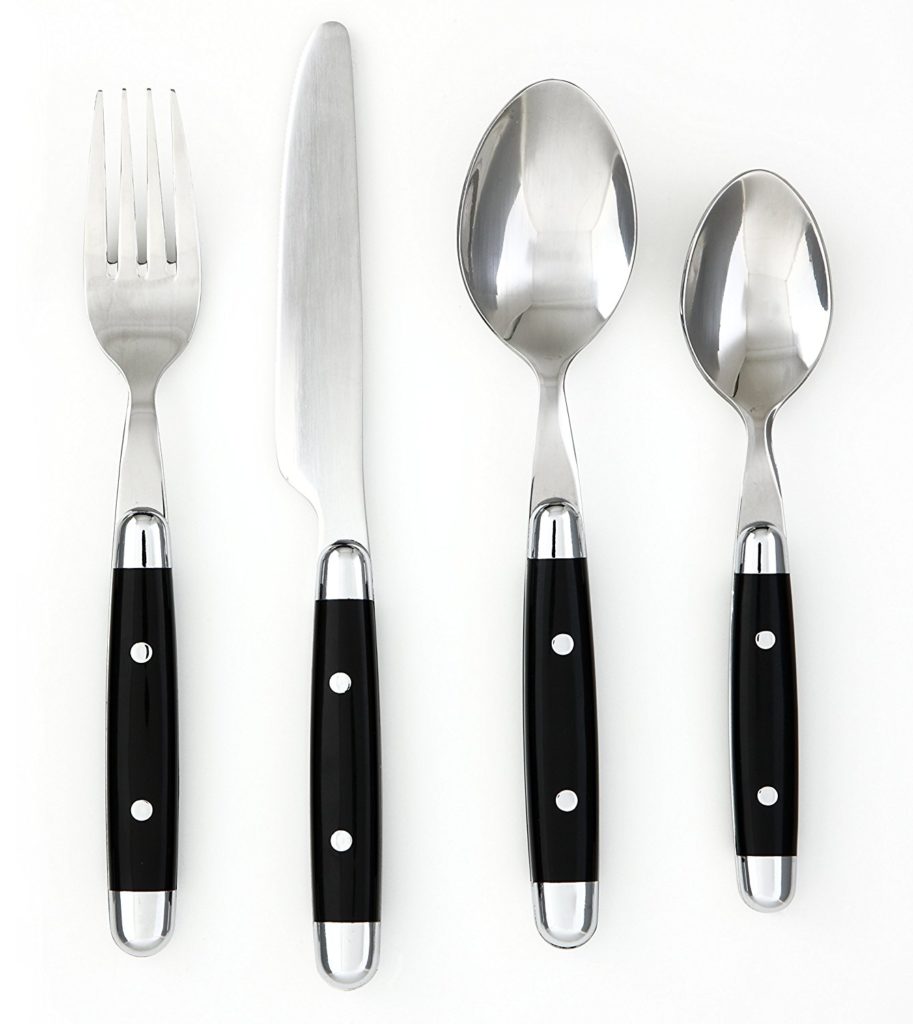
And, of course, if she’s got something to cook with and eat on, she needs something to eat with. I love this economical flatware set because it’s neutral without being bland, and these utensils from Cambridge Silversmiths are pretty dang hardy.

Housewarming Gifts for Single Women | The American Spinster

Cambridge Silversmiths Jubilee Black 16 Piece Flatware Set – $20

5. Towels

Why are people so reluctant to give towels as housewarming gifts? If your single woman friend or relative doesn’t have a lot of extra cash, she’ll probably do what I did and get the economy towels on sale at Kohl’s for $2.99 a piece. And that’s fine. But if you want to give her something nice, get a luxury towel or two.

Housewarming Gifts for Single Women | The American Spinster

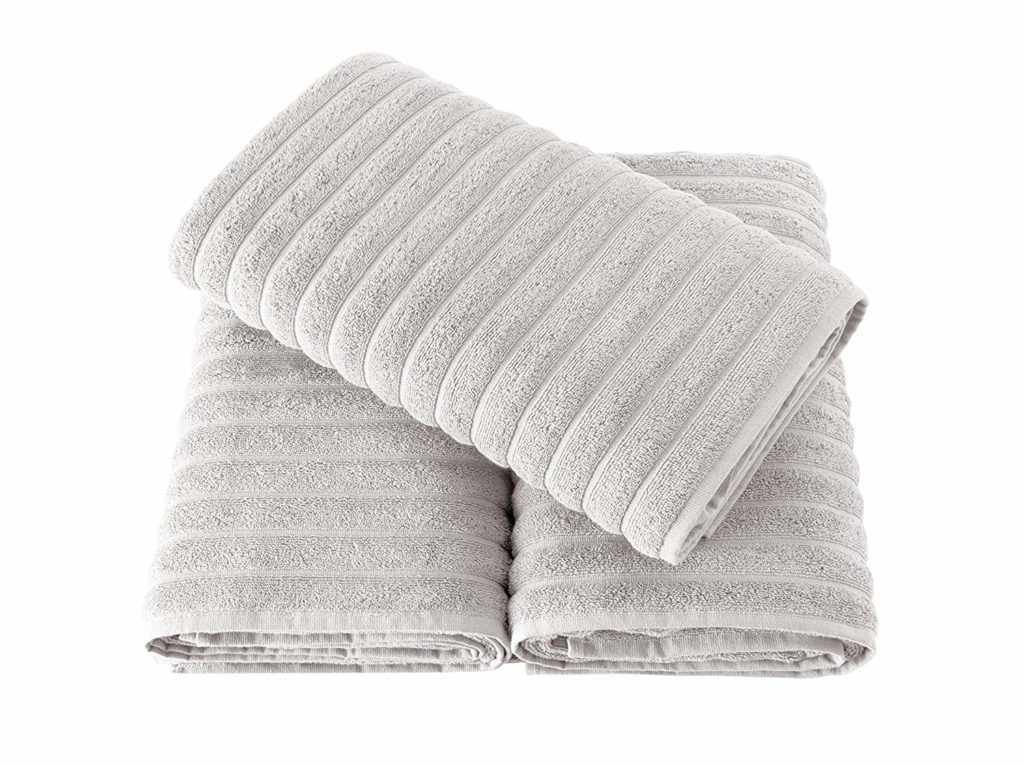
I don’t own a set of these Turkish towels, but I recently stayed with someone who did. And they are amazing. These are exactly the sort of housewarming gifts that thrifty single women won’t buy for themselves, but will absolutely love to use.

If you know what color she wants her bathroom to be, go with that. If not, get white or ivory to keep things neutral.

Housewarming Gifts for Single Women | The American Spinster

Classic Turkish Towels 3 Piece Luxury Bath Sheet Set – $60

Did you find this list helpful? What are some ideal housewarming gifts for single women living solo? Let me know in the comments below.


Housewarming Gifts for Single Women | The American Spinster

Some of these images are provided by Kaboompics. The rest are either my own or from Amazon.com.

Going Solo: The Extraordinary Rise and Surprising Appeal of Living Alone

One of the books on my spinster book list is Going Solo: The Extraordinary Rise and Surprising Appeal of Living Alone, by Eric Klinenberg. If you’ve wondered whether or not it’s worth adding to your own library, here’s my take on it.

{Because I enjoyed and recommend this book, this post contains affiliate links. Please read my affiliate links disclosure here.}

What’s Going Solo by Eric Klinenberg About?

Going Solo is a nonfiction book that examines, as the subtitle suggests, the fact that more people are living by themselves these days than they ever did in the past. Klinenberg uses statistics and anecdotes to take a pretty deep look at the issue.

Going Sadly Single?

Overall, this is a well-balanced, well-written book about the trend toward living singly.  In my opinion, despite the largely positive introduction, the book takes a relatively neutral–if not slightly pessimistic–view on the issue.

At certain times the author seems to conflate living s solo life with living a life of severe social isolation. Klinenberg does recognize the distinction between the two in the book. Still, he devotes a lot of time to stories of people who either ‘went solo’ without really wanting to or who simply isolated themselves.

My Take-Away from Going Solo

In the end, it’s a pretty balanced book. The introduction made me think it might be more of a champion for living solo, or offer some practical steps to living alone in a healthy way, but that’s really not what this book is about. Klinenberg saw this trend and decided to explore it, and he does so very well. He doesn’t shy away from the fact that a lot of people are living alone not because they want to but because they’ve found themselves in that situation.

But he does also examine things from the pro-solo community. He also glances at the fact that in some cases the compulsion to be isolated–rather than the choice to live singly–may be the cause of much of the unhappiness about living alone.

Should You Check It Out?

I’d recommend reading this book if you’re interested in:

  • The difference between living solo and living in isolation
  • Learning more about living singly
  • The surprising trend toward solo living and what might be causing it
  • How living alone affects people and society

Even though it wasn’t quite what I expected when I picked up the book, it was well worth the read. A few of Klinenberg’s writing quirks stood out to me, but nothing that seriously distracted me from the overall message. This is by far the most comprehensive book on the topic of single living I’ve found.

Where to Buy Going Solo by Eric Klinenberg

If you’re not ready to put down the cash, support your local library by borrowing this book. If you’d rather underline, dog ear, or highlight the pages, you can order a copy through this nifty affiliate link. Going Solo: The Extraordinary Rise and Surprising Appeal of Living Alone


Please note: We are a participant in the Amazon Services LLC Associates Program, an affiliate advertising program designed to provide a means for us to earn fees by linking to Amazon.com and affiliated sites.


Have you read Going Solo? What did you think about it? Let the solo community know in the comments.

Is Single Discrimination a Thing?

Single discrimination? Do single people really think they’re being discriminated against? What’s next? Has the world gone made with this PC nonsense?? It’s okay, everyone. Let’s take a (calm and rational) look at single discrimination in the workplace.

In this post you’ll learn:

  • What single discrimination is
  • Why it matters
  • What you can do about it
What is single discrimination?

Single discrimination is a non-legal term referring to the way employers often expect single people to perform more work than their married counterparts. This seems to happen because employers assume single people have more free time, as we don’t have a ‘traditional’ home life.

In my free 30-day email course, I mention my encounter with my co-manager Janice. Janice genuinely and openly believed that single people liked working extra hours because they had “no reason to go home.” She also felt that she (a wife and mother) shouldn’t have to work as many hours because she had a family.

Janice isn’t alone. Unfortunately many employers hold similar views. Single people frequently report being told to work longer or less convenient hours than married workers. When non-married people are frequently treated less favorably than married people due to their marital status, we call it single discrimination.

Is Single Discrimination a Thing? | The American Spinster

But… don’t single people have extra time?

Employers seem to forget that single people usually still have families. And even though we don’t have spouses or children, we still have significant familial responsibilities. When it comes to caring for aging parents, the tradition still holds true: single people tend to become the primary caregivers to their parents. But employers still dump extra work on us, assuming that our families (and our free time) are less valuable.

What if you don’t have to take care of a family member?

Listen. Your free time is your free time. If your life choices have brought you to a point where your free time involves binge watching Netflix while binge drinking Coronas, that’s your business. You don’t need to convince your boss that you’re drowning in familial obligations to get your due time off.

Is Single Discrimination a Thing? | The American Spinster

But… shouldn’t single people be willing to help out married co-workers?

Look, I get the whole social responsibility thing. When I worked at a grocery store, I always volunteered to work the holidays so my married coworkers could have those days off. I rarely had to host family meals, so it seemed only fair to let those who did have the extra time to do so.

But when I did have to host a Christmas dinner for my family one year, I found out quickly that my boss and co-workers didn’t take my situation seriously. Even though I had to prepare everything myself (remember, no spouse to help out), they told me it was “sweet” that I was going to cook for my parents. They seemed to think I was going to put on my tutu and princess crown and bring my folks breakfast in bed, rather than host a full holiday meal for my extended family.

As they saw it, I didn’t have a ‘real’ family. I didn’t have kids. I didn’t have a husband and in-laws to cook for. While I may have volunteered to work for them for years, they weren’t willing to return the favor. They simply didn’t believe my family was as legitimate as theirs.

Is that really discrimination?

By definition, discrimination means treating someone unequally or unfairly due to a set of characteristics. So yes, requiring single employees to work longer, later, or at inconvenient times based on their marital status is discrimination. However, it’s not unlawful discrimination in the workplace. Marital status is not a protected group.

Is Single Discrimination a Thing? | The American Spinster

So what’s the solution to single discrimination?

First, recognize that your time is valuable, whether your boss thinks so or not. Your co workers have chosen (in most cases) to be married and have children, just as you’ve chosen to stay single. You shouldn’t have to sacrifice time doing what you wish so that they can spend more time doing what they wish.

Don’t get me wrong, you should still be considerate. If your co-worker needs to take her kid to their first day of kindergarten or take her husband in for surgery, accommodate her if you can. But if you need to help your mother move or take your cat to the vet (hey, no spouse can do it for you and you can’t let the poor thing suffer), take the time you need to do these things. And if your boss consistently expects you to cover because you ‘don’t have a family,’ feel free to say, “I’m sorry, I can’t.”

{Learn how to rock your career as a single woman}

Your time is no less valuable because you aren’t married. You are no less valuable because you aren’t married. You can be a nice person and a helpful co-worker without being a doormat.


Have you experienced single discrimination? How did it affect your career? Share your experiences in the comments below.

Is Single Discrimination a Thing? | The American Spinster

Images provided by Kaboompics

3 Ways to Rock Your Career as a Single Woman

It’s easy for single or childfree women to feel weird about loving their careers. In this blog you’ll learn:

  • Why we feel uncomfortable loving our jobs
  • Why you should love your work
  • 3 ways to totally rock your career

No matter what job you have, what industry you’re in, or what type of job you’re stuck in at the moment, these 3 tips will help you create a badass career. So let’s get to it.

The American Spinster on Pinterest

Why Childfree / Single Women Feel Weird About Their Careers

Why do we have such a weird relationship with our work? I think it’s because, in the grand scheme of things, women haven’t been holding ‘traditional’ jobs for very long. Remember that before WWI, even poor women generally became full-time caregivers after marriage. The woman who continued working through her thirties was typically a spinster.

After the sexual revolution of the 1960s, married women began holding regular jobs outside the home. Society reacted to this dramatic shift with confusion and a new set of rules, including:

  • Married women can work when it doesn’t interfere with child-rearing.
  • These jobs must provide supplementary – not equal – income for the family.
  • Women can’t care more about their jobs than they do about their husbands or children.

So a married women could love her job as a nice little side hobby. Something to occupy her when her kids and husband don’t need tending. But what about unmarried and childfree women? Sadly even women’s lib couldn’t get rid of that social stigma. The childless, single woman was still a piteous thing (or would be once her sex appeal faded), and any zeal she felt toward her job was just a sad substitute for a family.

The reason we childfree, single women feel so dang weird about loving our jobs is because ever since we started working, we’ve been told that if we love our work too much, we must be lacking or neglecting something more important. We still see this everywhere. On TV, in the movies, and in the books we read. Happiness for women comes from their family, and loving a job too much threatens to undermine that need.

3 Ways to Rock Your Career as a Single Woman | The American Spinster

Why You Should Take Care of Your Career

If we ignore the notion that a ‘career woman’ is someone who has to turn to her job for fulfillment because the rest of her life is lacking, we see that focusing on your career is actually really important. Not only does it get you the money you need to live your best life, but you’re committing 40 of your waking hours to it every week. That’s over one third of your waking hours every week. That’s a ton of time to spend on something you don’t really care about.

Your career isn’t just something you should care about in a theoretical kind of way. This is something you should actively care for. Take time to make it something that you’re enjoying and that’s contributing to your life in a really significant way. Trying to pretend it doesn’t matter because you’re afraid of looking like the loveless career woman is a bit silly. So let’s set that aside and fall madly in love with our careers, shall we?

3 Ways to Rock Your Career as a Single Woman | The American Spinster

3 Ways to Rock Your Career

Okay. So what are the three big ways you can take care your career and make it totally rock?
{Psst… read through to the end for an awesome FREE resource for loving your solo life!}

1. Make time for career development.

Rarely do companies offer career growth training to their employees anymore, so it’s up to you. Set aside an amount of time every week (ideally measured out through each day) when you can work on a skill that will help you move through your career.

This helps you by:

  • Displaying your dedication to your role
  • Getting the skills you need to advance
  • Keeping you motivated for your future

What is a skill you need to help you on your ideal career path? Find the resources you need and start using them.

2. Be a student at work.

This applies whether you like your current job or not. No matter how far it is from your dream job, there is something valuable you can learn there that will help in that future job Always go to work with the mindset of someone who wants to learn how to do their job better. Find the areas where you can improve and focus on them. Make weekly goals of one small thing you want to improve.

This will help you:

  • Get better at what you do
  • Show management that you’re willing to learn
  • Keep your ego out of your way

Keep a list of the things you learn through your job each week.

3 Ways to Rock Your Career as a Single Woman | The American Spinster

3. Be nice.

It’s obvious, but it took me years to really understand what this meant. I grew up believing that only certain people deserved my friendship or good behavior. When I did, I always felt like the outsider. Like this job (whichever one it was) wouldn’t last too long because only a few people really wanted me there or understood what an asset I was.

That didn’t work out too well, so I tried something different. And now I’m encouraging you to see everyone (yes, even that person) as a friend. You’re in a relationship with every one of your co-workers and bosses. Give each one of those relationships the attention it deserves. When I started seeing my co-workers as relationships I needed to work on, things got so much better.

This benefits you for three main reasons:

  1. You won’t have enemies at work.
  2. You won’t be drawn into low-vibrational gossip or backstabbing.
  3. Bosses recognize people that play well with others as an asset.

You deserve to be friendly and kind to everyone you work with. It’s difficult, but I promise it’s worth all the extra effort.

Are You Ready to Love Your Solo Career?

There’s nothing wrong with loving your work and feeling fulfilled by it. The fact that you’re a woman (and a woman ‘without a family’) doesn’t change the fact that the work you give this world is valuable and meaningful. Love your career. Love the work you do. And most importantly, love your amazing, solo self.

If you’d like an in-depth, FREE resource to help you truly love your solo life, sign up for the American Spinster’s 30-Day Email Challenge. You’ll get a new challenge delivered to your inbox every day for 30 days. Take the plunge and sign up now!

30 Days to LOVE Being Single | FREE Email Course

Has your solo status made you feel uncomfortable being a ‘career woman?’ Let me know in the comments below!

All images are provided by Kaboompics.

3 Ways to Rock Your Career as a Single Woman | The American Spinster

Dealing with Loneliness as a Solo Woman

Even the most contentedly introverted among us feels lonely at times. As a solo woman—someone who sees herself as happily single—it’s easy to feel like loneliness is a symptom of defeat, failure to love your single life. But there’s nothing wrong with being lonely and single. Loneliness is a normal, human emotion, even for the happiest solo woman.

Unless your feelings of loneliness are persistent and affecting your daily life, they’re probably not cause to doubt your lifestyle. Just as feeling occasionally angry or sad wouldn’t make you second-guess your career. Here’s how to deal with being lonely and single as a solo woman.

1. Acknowledge and accept the feeling.

Remember that it’s perfectly okay to feel lonesome sometimes. We live in a world that sees feeling lonely as a sign that something is deeply wrong and needs to be righted immediately (this is especially true if you’re lonely and single). Worse, the media we consume usually says that we can get rid of those frightening lonely feelings by finding a partner. Both of these beliefs are wrong. It’s okay to be lonely, and having a loving partner won’t keep you from feeling lonely in the future.

Loneliness simply signifies a need, just like hunger. And you wouldn’t expect to never feel hunger just because you bought a fridge.

What to do when you're lonely and single | The American Spinster

2. Figure out why you’re lonely.

What’s causing you to feel lonely? For myself, loneliness normally comes from one of two sources. Either I really want to communicate with someone and have no one around, or I’ve tried to communicate with someone and they either didn’t listen or didn’t understand. In either of these situations, my oasis of solitude can like a prison room at the top of a tower.

It may be entirely different for you. Take a few moments to look within and find out why you’re feeling lonely. Then acknowledge that reason. For me, this goes like, “I tried to explain my feelings to my best friend, and she didn’t understand. Now I look around my home and it feels empty and lacking.”

3. Believe that your feelings are okay.

Remember, feeling lonely while single doesn’t mean you’re not a strong, solo woman. It just means you need social interaction like every other healthy human being. Our parents, society, and popular culture have trained us to believe that the first flutterings of loneliness are heralds to the loneliness apocalypse (loneli-pocalypse?), and we’d better change our ways lest we end up forever alone.

You wouldn’t believe you had a digestive problem every time you felt hunger, would you? Of course not. Because we understand that hunger signifies a normal need, not an unfulfilled life. In the same way, occasionally feeling lonely means you need some social interaction, not a total lifestyle overhaul.

What to do when you're lonely and single

4. Either let the feeling pass, or adjust your thinking.

Sometimes, you just need to let yourself feel lonely. If you’re in a situation where talking to someone at that moment isn’t an option, or if you’re feeling sad from being ignored or misunderstood, it’s okay to feel lonely. Remind yourself that this feeling is fine, and that it will pass.

You can also examine your situation from a more helpful point of view. In my case, I’d say to myself, “Having one poor conversation doesn’t mean that things are hopeless and that my life is lacking.” Getting rid of that feeling that the loneli-pocalypse is upon me usually makes everything seem better.

30 Days to LOVE Being Single | FREE Email Course

5. Do something.

You don’t want your response to the first few pangs of loneliness to be to run out into the world and search for someone to get rid of this feeling. Being lonely and single is fine, and it’s vital to accept that. Trust me, it’ll save you from some panicked (and therefore bad) decisions. To compare loneliness to hunger again, when you felt your stomach rumble, you wouldn’t drop whatever you’re doing and shove the first piece of food you found into your mouth just to avoid feeling hungry for a few moments, would you? Of course not. You know that hunger doesn’t mean something’s wrong, and most of us can sit with hunger for a few minutes without fearing that we’ll starve to death. Loneliness is the same way.

Having said that, once you’ve accepted your feelings, do something about them. As I said earlier, loneliness signifies a need for social interaction. If you’re in a situation where you can call a friend or go out for coffee, go ahead. If not, find some other way to meet that need.

When I’m feeling lonely due to feeling ignored or misunderstood, I’ve found it very helpful to write. Not only is this productive (making me feel accomplished), it helps to alleviate the source of my loneliness. When I write a blog and post it, my readers read it. Someone’s hearing me after all. What I write doesn’t even have to be related to what I wanted to express to that other person. Sometimes I just want to feel heard.

Just remember that being lonely and single doesn’t mean something is wrong or that the solo lifestyle isn’t for you. Don’t over-think yourself into a panic. It’s okay to feel lonely now and then.

What to do when you're lonely and single | The American Spinster

When is being lonely and single a sign of something more serious?

Of course, the solo lifestyle isn’t for everyone. How do you know if it’s for you? Just remember that the “cure” for loneliness isn’t a partner. If you’re feeling lonely more often than you think you should, it’s probably best to work on your own social interactions with others instead of pretending that binding another person to you will fix things.

Seek out a partner if you believe being in a relationship would help you live your best life, not because you’re afraid of feeling lonely.

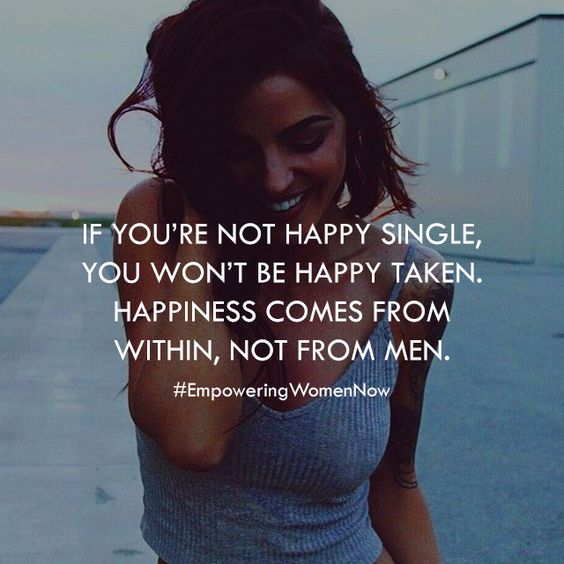
Happiness comes from within, not from men.
instagram.com/empoweringwomennow/

What do you think? Is it perfectly normal for people to feel lonely, no matter how happy their lives are? Let me know in the comments below.


If you’d like to receive more helpful resources for your single & childfree life, join the American Spinster mailing list:


What to do when you're single and lonely? | The American Spinster

All images provided by Kaboompics