Happily Single & Childfree

Join the Community!


The American Spinster


  • Spinstercore: The Aesthetics of Solo Living

    Spinstercore: The Aesthetics of Solo Living

    Why spinster hobbies are making a comeback with solo women

    Spinstercore? What are the kids on about now? Turns out, thereโ€™s joy in embracing the spinster lifestyle exemplified by Miss Marple and her TV reincarnation, Jessica Fletcher. Thereโ€™s a reason spinster hobbies are popular among women now: theyโ€™re fun, fulfilling, and mentally enriching. And because spinstercore and grannycore have a lot of overlap, itโ€™s no surprise that theyโ€™re how our grandmothers stayed sane. In this difficult world, lord knows we need some of that.

    What is โ€œspinstercore?โ€

    This past spring, Carol J. Michel posted a blog titled, โ€œBeginning My Spinstercore Gardening Era.โ€ While Carol didnโ€™t invent the term, her blog quickly became the top source of information about this emerging aesthetic. As a gardener, Carol understandably focuses on the gardening aspect. I want to take it a little further.

    Famous fictional spinsters tend to be mature, level-headed, confident, and sometimes slightly eccentric ladies. Iโ€™ve merged the fictional with the traditional to come up with my own understanding of this trend. So what makes up the spinstercore aesthetic? I think there are four main elements: gardening, baking, needlework (knitting, crocheting, weaving), andโ€”of courseโ€”solving mysteries.

    If youโ€™re ready to take up the mantle of the spinster life, let me introduce you to your new hobbies.

    Skip ahead:

    Gardening
    Baking
    Needlework
    Mysteries

    Gardening

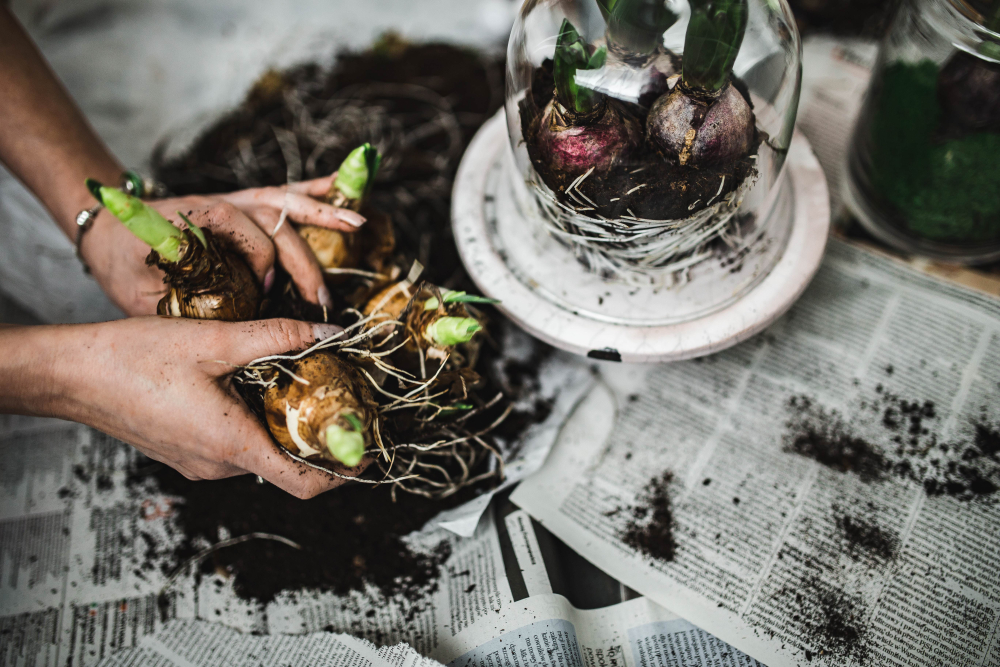
    Gardening is a central part of spinstercore. In between solving mysteries, the lovely ladies of spinster fame are found tending to their gardens or entering into flower competitions. But spinstercore doesnโ€™t involve just any old gardening. Carol J. Michel breaks it down in her blog:

    You can do the heavy lifting yourself, of course. But be assured, outdoor gardening will absolutely call for some heavy lifting. Gardening of any sort requires a lot of effort and attention. Itโ€™s not a hobby for the faint of heart. But the rewards are worth it. In fact, the effort is part of what makes gardening good for your mental health.

    Why gardening is a healthy hobby

    Gardening is calming. It offers a sense of hope for the future and it adds structure to busy lives. The Cleveland Clinic says that gardening is an effective way to manage stress and anxiety. It can even help maintain cognitive function. No wonder so many of our favorite spinsters gardened. And, while I recommend starting with a container garden or a windowsill garden, spending time outdoors in the sun can also improve your overall health and well-being.1

    How to get started with spinstercore gardening

    As I said, outdoor gardening requires a lot of effort. So I suggest starting small. An herb garden is the ideal way to dip your toes into gardening. You can grow herbs on your counter top, windowsill, or patio. No heavy lifting required. You can always upgrade to an outdoor garden plot if you find your little herb bed isnโ€™t enough to satisfy your spinstercore craving.

    Readerโ€™s Digest is my go-to source any time I want an introduction to a new hobby. Their Essential Book of Herbs is the guide you need to choose your herbs, start your garden, harvest your plants, and incorporate them into your food.

    Of course, if you want to start really small and low-effort, get a self-watering herb garden from Click & Grow:

    Baking

    On the surface, baking seems like the least essential part of the spinstercore aesthetic. After all, a spinster living alone doesnโ€™t have many people to bake for (or does sheโ€ฆ?). But thereโ€™s so much more to baking than putting a pie in front of a husband.

    Baking connects us to our human history, our ancestry. Itโ€™s an invaluable skill, and one that any spinster living in a rural area would have developed. While urban spinsters of the past typically lived in boarding houses, where meals were provided, the country solo woman was definitely doing her own cooking and baking.

    Why baking is a healthy hobby

    Baking allows you to see something to completion. And, unlike gardening, it offers an almost immediate reward. Instead of waiting a season to see whether or not your flowers bloom, you wait about 20 minutes to make sure the biscuits came out right.

    Two loaves of handmade bread in a mesh bag | Spinstercore: The Aesthetics of Solo Living | The American Spinster

    According to NeuroLaunch, baking can even improve your self-confidence. The editorial team writes, โ€œEvery time you complete a recipe, your brain updates its model of what youโ€™re capable of. This is self-efficacy, not self-esteem in the vague sense, but a specific belief about your competence in a particular domain.โ€ They go on to explain that the confidence earned by successfully completing a tricky recipe affects other areas of life as well.

    So start simply, but continue to push the boundaries of what you can do. Soon, youโ€™ll have trained your brain to see yourself as the competent solo woman you are.

    How to get started with spinstercore baking

    Before you can attempt a soufflรฉ, youโ€™ll need to lay a strong foundation. If baking is brand-new to you, I recommend starting with the updated 13th edition of the Betty Crocker Cookbook. This is an ideal introduction, as it explains the basics and breaks down the steps (something that more specialized cookbooks and online recipes rarely do).

    Be sure to share your creations, too! Start a baking Instagram or join a local baking class to get the most benefit from your new spinstercore hobby.

    Needlework

    While weaving and spinning are obviously the fiber arts most associated with spinsters, I think we can borrow knitting and crocheting from grannycore for this. That doesnโ€™t mean you need to start with granny squares, though. Elyse Myers recommends starting out with animaguriโ€”small, simple projects you can complete in an afternoon. If you feel the need to start with something more practical, a cross-body phone case or kerchief will work just as well.

    Why needlework is a healthy hobby

    Like gardening and baking, these spinstercore hobbies offer a range of mental health benefits. Knitters say it helps with stress reduction.2 One study even looked at the effect knitting had on people dealing with long-term illnesses. It found that knitting provided a sense of increased autonomy and quality of life.3 Itโ€™s also an effective way for people who donโ€™t see themselves as artistic to express themselves. A 2024 study even found that, โ€œneedlecraft has an overwhelmingly positive effect on mental health and general well-being.โ€4 Perhaps most interesting in the context of our waning attention spans, crocheting appears to improve focus and alertness.5

    Close-up image of a loom | Spinstercore: The Aesthetics of Solo Living | The American Spinster

    How to get started with spinstercore needlework

    Sadly, the guide that I learned from is out of print. But you can still find The Readerโ€™s Digest Complete Guide to Needlework on used book sites, such as Thriftbooks or on eBay. Itโ€™s also available on the Internet Archive.

    In its place, Iโ€™m suggesting the following beginner guides:

    For knitting:

    For crocheting:

    For weaving:

    I highly, highly recommend starting with a DIY cardboard loom! It allows you to get a feel for weaving before investing hundreds of dollars in a tabletop heddle loom.

    Solving mysteries

    And, finally, spinstercore involves solving mysteries. If Miss Marple has taught us anything, itโ€™s that a dedicated spinster can keep her town in order.

    Why reading mystery novels is a healthy hobby

    In all seriousness, reading mystery stories does offer real benefits. Reading fiction in general can prevent memory loss.6 And reading suspenseful fiction can help with emotional regulation in the form of resilience against stress.7 Mysteries, in particular, require the reader to concentrate and employ analytical thinking. By piecing together clues and sussing out intentions, youโ€™re exercising your brain in a low-stress environment. Author D.L. Ashmore speculates on this in their blog, Can Mystery Novels Improve Your Mental Well-Being?

    So if you want to stay sharp as a spinster, consider reading more mysteries.

    How to get started with spinstercore sleuthing

    Thereโ€™s no better place to dive into spinstercore mysteries than with Miss Marple herself:

    With the audio version Iโ€™ve recommended, you can listen to mysteries while you garden, bake, or crochet!

    Step into your ‘spinstercore era’ today

    Whether youโ€™re ready to test out a single spinstercore hobby or dive head-first into all four, youโ€™re sure to be rewarded for your effort.

    Do you already garden, bake, crochet, knit, or weave? Are you a mystery aficionado? And, if not, will you give any of these hobbies a try? Share your experience in the comments below.


    Footnotes

    1. https://www.healthline.com/health/healthful-benefits-of-gardening โ†ฉ๏ธŽ
    2. https://journals.sagepub.com/doi/10.4276/030802213X13603244419077 โ†ฉ๏ธŽ
    3. https://www.tandfonline.com/doi/abs/10.1080/14427591.2004.9686532 โ†ฉ๏ธŽ
    4. https://www.tandfonline.com/doi/full/10.1080/01612840.2024.2364228 โ†ฉ๏ธŽ
    5. https://www.nature.com/articles/s41598-025-88777-9 โ†ฉ๏ธŽ
    6. https://www.inc.com/jessica-stillman/a-neurologists-secret-weapon-for-keeping-your-memory-sharp-as-you-age-novels.html โ†ฉ๏ธŽ
    7. (https://anasage.com/the-neuroscience-of-reading-thrillers-why-your-brain-craves-suspense โ†ฉ๏ธŽ
    Spinstercore: The Aesthetics of Solo Living | Hobbies to improve your mental wellness.

    Leave a Reply

    Your email address will not be published. Required fields are marked *

    This site uses Akismet to reduce spam. Learn how your comment data is processed.


  • Independent Living as a Chronically Ill or Disabled Woman

    Independent Living as a Chronically Ill or Disabled Woman

    Living Alone When You Need Support

    Typically when I discuss the difficulties in living alone, Iโ€™m talking about money. Itโ€™s too expensive for the average person to live alone. Itโ€™s usually too costly to live with just one roommate. But Iโ€™m not talking about financial difficulties today, at least not directly. In this blog, I want to look at why disabled women who have atypical support needs struggle with independent living.

    When you need help meeting your needs

    Burritos_and_adhd (an AuDHD woman) made a video in which she says that her support needs were better met when she was in abusive relationships with men. Though not advocating for that (she notes that she would not go back to an abusive relationship to have those needs met), she clearly articulates a point that I simply donโ€™t see people talking about. In general, I think people are more aware than we used to be about financial abuse and financial dependence in abusive relationshipsโ€”though we still have a lot of educating to do on that topic. But when it comes to other basic needs, thereโ€™s a disconnect.

    As someone with disabilities that can make taking care of myself difficult, I understood her post completely. I have gone back to unhealthy relationships for both financial reasons and for other support needs. Like Burritos and ADHD, my needs were not well met in those situations, but it was marginally better than living on my own. Iโ€™m very fortunate now to have a life where I can largely accommodate myself and rely on trusted people for help when I need it. But this way healthy independent living is relatively new for me. And it still isnโ€™t perfect.

    Before I talk about how to manage your support needs as a disabled woman, letโ€™s get more specific. What type of needs are we talking about?

    What are moderate and low support needs?

    When weโ€™re talking about support and disability, we can think of things in a few broad categories. Low support needs autistic adults are usually (though not always) capable of independent living in as much as they will generally be able to pay bills (not always on time), feed themselves (not always consistently), and manage their own basic hygiene to varying degrees. But even for low-support needs individuals, thriving or maintaining a healthy lifestyle (financially and physically) can be difficult or unattainable.

    Often, low support needs adults will simply have to let aspects of their well-being fall to the wayside to keep up with more immediate responsibilities. For instance, an autistic woman may miss or skip meals and may rely on less nutritious options when she does eat. She may have to ignore household cleaning and maintenance. Thatโ€™s so that she can focus her energy on things like managing her money and holding down a job. Autism manifests differently for everyone, so thatโ€™s one example out of thousands.

    People with chronic fatigue face very similar challenges. They have to parcel out the energy they have, when they have it, which means that a lot of basic care is going to be left undone. For disabled women with physical limitations, independent living may not be comfortable or sustainable.

    A note on social support needs

    Social support is multi-faceted. It has different meanings and subtypes. For instance, social support could refer to the need for socialization. As humans, even introverted ones, we require some level of socialization to remain physically and psychologically well. It can also be a human support system that you, as a disabled person, need to navigate the world. For women with autism spectrum disorder, social support could refer to the support needed to manage social interactions.

    In Living Independently on the Autism Spectrum, author Lynne Soraya describes initially relying on her friends to identify which people were trustworthy and which were not. After some time, she was able to make her own, largely accurate, observations about people. But she still advises seeking input from others due to associated issues, such as alexithymia.

    Sadly, people with physical, mental, and neurological disabilitiesโ€”people who may have an even greater need for social supportโ€”often have to manage with less help from their community. Many people are taught to see disabled people as burdensome and needy, leading them to fear forming those relationships. That in turn can lead disabled women to hide their needs for fear of being neglected or abandoned. So, social needs are often difficult for disabled or chronically ill women to meet, regardless of the specific struggle.

    Where support needs impact independent living

    In a perfect world, perhaps everyone would be accommodated to the point where independent living was a possibility for anyone who wanted it. But thatโ€™s sure not the world weโ€™re living in now. In the United States, where hyper individualism has broken down many communities in just a few generations, disabled people face the cultural belief that anyone who depends on others for help is a โ€œburden.โ€

    Before we go on, we need to consider the fact independent living isnโ€™t always the goal. Many low-support needs women would like to live with someone, but donโ€™t have anyone in their lives who can be a roommate, companion, or partner. In this blog, Iโ€™m going to focus on single women who either are living alone or would like to live alone and have their needs met, but itโ€™s important to remember that that isnโ€™t everyoneโ€™s ideal.

    Making independent living possible

    How can you balance getting your needs met with maintaining an independent lifestyle? If you have the means, hiring a part-time caregiver, a house cleaner, or a pet-sitter are great ways to get the help you need. But whether you can afford those accommodations or not, youโ€™re still going to need toโ€ฆ

    Find community

    Youโ€™re probably tired of reading that. Believe me, I understand. For many disabled women, maintaining a social life is particularly difficult. Mobility limitations, low stamina, high anxiety, and the double empathy problem are just a few of the things that severely limit our ability to stay connected. Itโ€™s a rotten cycle; disability makes socializing fraught, but socializing is one of the primary ways to find accommodation. On top of that, disabled women are far more likely to face economic uncertainty. And socializing is expensive. You need money for meals, event tickets, gas or cab fare, a nice dish to bring to the potluck, etc.

    Your best bet is typically to find local, like-minded people. If the group meets locally, there will be fewer logistical issues, like timing and transportation, to work out. And as to like-mindednesโ€ฆ That wonโ€™t just mean having the same hobbies. Finding a club for something youโ€™re already interested in is an ideal place to start, but thatโ€™s not the most important factor. You need people who will work to include you. A small group that values similar things will be more likely to work to include you when your support needs run high.

    Iโ€™ll talk more about specific places to start your search a bit later. For now, though, letโ€™s continue. Youโ€™re also going to need toโ€ฆ

    Get comfortable asking for help

    This can be difficult, especially since many of us have spent years trying not to be a bother. And it may feel counterintuitive when your focus is on independent living. But trying to manage your additional needs on your own will lead to burnout quickly. Plus, asking for help early on will aid you in identifying your ideal friends. The right people will be glad to lend a hand. The wrong people will bail. That simplifies the entire process.

    I recommend starting small. Depending on how adverse to asking for help you are, this could be something as simple as asking someone to bring you back something from the store. Most people donโ€™t mind lending a helping hand. Plenty of people actually enjoy being able to offer assistance.

    Helping out is usually easy. Asking for help is hard. Thatโ€™s why it can be difficult to move from a charity mindset to a mutual aid mindset. But if we want to build a better community, weโ€™ve got to learn.

    Accept that you might not be able to fully thrive

    The ugly truth is that sometimes, solo living will come at a high cost. Youโ€™ll need to decide what kind of cost is manageable, and whatโ€™s too high.

    If your apartment is a mess because all your energy went to performing well at your job, give yourself some grace. I love the solo lifestyle as much as anyone, but we were never meant to handle everything alone.

    Where to start finding support?

    So where does a disabled woman start looking for this community? If youโ€™re religious, your local church, temple, mosque, fellowship hall or meeting house can be an ideal starting point. Many religious organizations offer small groups and interest-based monthly meetings. If you arenโ€™t religious, you can often find the same type of social support from a local American Humanist Association or non-religious religions, such as the Sunday Assembly or Unitarian Universalists.

    If that wonโ€™t work, check out your local library. Many branches host interest-based social groups (even those that have nothing to do with reading). Your library may list these organizations online, or you may have to go to the location and look at a bulletin board. Local arts councils, comic book shops, bookshops, and other businesses also tend to offer their space to free-to-join groups like painting societies, gaming leagues, and book clubs, respectively.

    And as you go through the process of joining different groups, budget for the energy it will take to pull back from communities that are unhelpful, regroup, and try again. Your people are out there. If you canโ€™t find a local organization, an online group could be your best bet. They may not be able to help you meet your physical needs, but they can offer tremendous emotional support.

    Remember that the cost of community is discomfort

    As you visit different group searching for the right community, remember that nothing is going to be a perfect fit. Sometimes the more we find like-minded and like-hearted people, the more strongly we see the contrasts. Iโ€™ve never felt as ostracized by a group of people I dislike who are excluding me as I have by people who I believed would be accepting.

    As an example, I recently sat through a sermon in a fellowship I thought was very inclusive. I had met disabled women, men and nonbinary people there. So I was surprised (and disappointed) when the speaker launched into a declaration about how the disabled (mentioning those with Down syndrome, autism, ADHD, and cerebral palsy, specifically) are here to be our teachers. The tone felt condescending, particularly when they said many people who have been disabled for their entire lives, donโ€™t know that theyโ€™re different. So they know nothing but love.

    This person had good intentions. I donโ€™t think they meant to be condescending, didnโ€™t mean to โ€œotherโ€ disabled people. Or perhaps they thought since they were othering them in a positive way, it would be alright. But Iโ€™ve never met a teen or adult with autism. ADHD, cerebral palsy, or Down syndrome who didnโ€™t know they were different, diagnosed or not. Iโ€™ve also never met a disabled person who knew nothing but love. Human beings know anger, know abandonment, know grief. That includes disabled humans. Or, as the speaker said, โ€œdifferently abled.โ€

    They meant well, but suddenly, I was reminded that no group will be fully inclusive, no matter how much they mean to be. Youโ€™ll likely run into something similar in your communities. And when that happens, my advice is this: Expect ignorance, and when you find it, consider offering enlightenment.

    Should you stay, or should you go?

    Not every moment is a teaching moment, and not ever person is open to learning. And it takes some discernment to know when to speak up and when to simply leave. Just remember that ignorance and good intentions often go hand in hand. And if someone has good intentions, they can sometimes be educated out of ignorant beliefs. Ironically, disabled people do, in fact, tend to be teachers of non-disabled people. Not because of our simplistic worldview or knowing nothing but love, but the opposite.

    One last note on independent living withing a community

    As I often say, focus on what you can give back. Itโ€™s easy to fall into the trap of thinking that youโ€™re a burden when you have higher support needs than typical people. But you arenโ€™t. And one of the best ways you can prove that to yourself is to look at all the ways you provide for your community.

    I had a disabled mentor once who said she felt constantly self-conscious about how much help she needed. It surprised me, because while she needed some physical assistance, she gave so much of herself as a teacher. People should be cared for no matter how great their needs are, clearly. But I was surprised that she thought she was taking more than she was giving.

    This gets back to the idea of mutual aid rather than charity. We all have a responsibility to take care of one another in whatever ways we can. That means your community has a responsibility to care for you, and you for it.

    What are your experiences? Are you someone who needs support and lives independently or aspires to? If Iโ€™ve overlooked something, I hope youโ€™ll mention it in the comments below.

    Independent Living as a Chronically Ill or Disabled Woman | Living Alone When You Need Support | The American Spinster

    Leave a Reply

    Your email address will not be published. Required fields are marked *

    This site uses Akismet to reduce spam. Learn how your comment data is processed.


  • The Truth About Relationships and Expectations | For Single Women

    The Truth About Relationships and Expectations | For Single Women

    Relationships end for all kinds of reasons, but feeling unloved and disappointed are two of the biggest factors. Learn how to set healthy relationship expectations by seeing your relationships as assignments.

    How Wrong Expectations End Relationships

    All of our disappointments, disillusionment, and much of our suffering comes from our expectations. That’s especially true for relationships. When a romance doesn’t work out, it’s often – fundamentally – because one or both partners didn’t meet the other’s relationship expectations.

    “He didn’t express his love often enough.”

    “She wasn’t there for me when I needed her.”

    “They didn’t support my interests.”

    We had expectations (for showing love, providing companionship, and offering support) that weren’t met.

    The idea isn’t to lower your expectations or accept genuinely hurtful behavior. It’s simply to change the way you think about relationships and what they’re ‘supposed to’ provide.

    Because I so highly recommend these books, I have included affiliate links on this page. Please read The American Spinsterโ€™s affiliate links disclosure here.

    The Truth About Relationships for Single Women

    Relationships Are Assignments

    In her book, Spirit Junkie, Gabrielle Bernstein explains that relationships are assignments from God/the universe. She writes, “I quickly learned that each relationship we enter into offers us two options: to show up as two separate people looking for completion in one another; or to show up as two whole people coming together to enjoy their wholeness.”

    The two-separate-people-looking-to-be-made-whole option makes for compelling romantic storytelling. I love reading and watching relationships like that in books and movies. (“She’s got gaps. I got gaps. Together, we fill gaps.”) But when it comes to living a fulfilling life and creating a sustainable relationship, it’s generally not so effective.

    The Truth About Relationships for Single Women

    Bernstein goes on to say that, “if we waited until we were fully healed before we started a relationship, we’d put Match.com out of business.” She continues:

    Therefore, we have to recognize relationships as assignments that will bring all our neuroses to the table.

    Relationships at their best, their most fulfilling, their most holy, are a means by which we can grow and heal ourselves.

    Speaking of Match.com, want to learn how to date as a solo woman?

    What That Kind of Relationship Is Like

    Of course, what that really means is that your ideal partner isn’t the one who will be perfectly supportive as they gently guide you through your issues. That’s a therapist. The ideal partner that God/the universe has in store is someone who will, as Bernstein says, dig up all your shit.

    I want to take a moment to make sure I’m perfectly clear about this point. This does not mean your partner should be cruel, abusive, manipulative, or antagonistic. (If you aren’t sure if you’re in an abusive relationship, see PsychCentral’s guide.) It simply means that they’ll probably get under your skin and force you – indirectly and unintentionally – to face your previously hidden issues.

    One common example, especially for people who are often single, is, “They don’t really value me.” Here’s what that usually means.

    They make jokes that hit too close to home
    I have insecurities I don’t want to look at, and their jokes bring those insecurities to the surface.

    They don’t pay attention to me
    I don’t feel worthwhile unless someone else sees me as worthy of their time.

    They don’t respect my boundaries
    I’m unwilling to respect or enforce my own boundaries, but I expect others to do that for me.

    Again, these can be signs of a problematic partner (see 21 Warning Signs of an Emotionally Abusive Relationship). But we often choose to see them as signs the relationship has gone wrong, rather than signs that we need to address challenges in ourselves.

    30 Days to LOVE Being Single | FREE Email Course

    Why do we do this? It all comes back to our expectations.

    Resetting Relationship Expectations

    We expect our partners to complete us. Few of us go into a new relationship expecting our partner to be someone who will (often unintentionally) help us complete ourselves.

    If you’re planning on getting into a relationship, or if you’re struggling to make the one you’re in work, consider taking the following steps.

    1. Think of your relationship like the hero’s journey. You will face trials. They will seem to be external trials (“my partner does/doesn’t do X”). But they will turn out to be internal trials (“I need to do/stop doing Y”). And when you’ve overcome them, you will be a stronger, more whole, and wiser person.
    2. Read Gabrielle Bernstein’s Spirit Junkie, or The Universe Has Your Back. Both books talk about relationships as assignments.
    3. Read this article if you’re unsure whether your partner is just rubbing you the wrong way, or being mentally/emotionally abusive.
    The Truth About Relationships for Single Women

    If you choose to get into a relationship, do so with the knowledge that it will not be the answer to anything. Instead, it will be a means of ongoing self-development. It will feel uncomfortable some of the time. Your partner will brush up against your insecurities. And your response will have to be to look your issues in the face and deal with them head-on.

    Images provided by Kaboompics

    Are you in a living-apart-together relationship? Have you struggled with this issue? Share your experience in the comments below.

    Leave a Reply

    Your email address will not be published. Required fields are marked *

    This site uses Akismet to reduce spam. Learn how your comment data is processed.


  • Do You Need to Get Married? JAMIEvstheVOID

    Do You Need to Get Married? JAMIEvstheVOID

    If you’re a woman over a certain age, you’ve probably heard the question, “When are you two getting married?” Artist JAMIEvstheVOID explains why they don’t feel the need to get married in this brief animated story.

    You Don’t Actually Need to Get Married

    I love the YouTube channel, JAMIEvstheVOID. The animation style and topics Jamie covers are right up my alley. Still, I never imagined watching something that would apply so directly to The American Spinster. So imagine my delight when a few days ago they posted a video all about why the don’t feel the need to get married.

    The 14-minute original animated video shows the creator’s very respectful views on marriage, and why they personally don’t see marriage in their future.

    I couldn’t agree with you more, Jamie.

    If you want to commiserate with another single-by-choice person over the internet or you’re just curious about why anyone wouldn’t want to get married, this video is for you. And if you like original animation, JAMIEvstheVOID’s channel might be for you, too. Be sure to check out their other vids.

    Do we really NEED to get married? JAMIEvstheVOID
    “Do we really NEED to get married?” JAMIEvstheVOID

    Is Your Family Waiting for a Wedding Invitation?

    It’s hard for us Millennials and Gen Zs to remember this, but women did need to get married not long ago. While women have had the legal right to work for millennia (that’s where the word ‘spinster’ comes from), most didn’t until recently. Many jobs weren’t available to women. And most women had to choose between motherhood and a career. It was only about 50 years ago that the feminist movement helped women break into the workforce en masse.

    That’s why many parents and grandparents still see marriage as a woman’s safety net. Marriage was a financial and social requirement for most of civilized human history. 50 or 60 years just isn’t enough time to erase that.

    If you’re dealing with this, think about sharing JAMIEvstheVOID’s video. It might help your friends and family think critically about the need to get married.

    You don't need to get married. Check out 30 Days to LOVE Being Single, a FREE email course

    Leave a Reply

    Your email address will not be published. Required fields are marked *

    This site uses Akismet to reduce spam. Learn how your comment data is processed.


  • How to Like Being Single (in 30 days)

    How to Like Being Single (in 30 days)

    Has the New Year found you flying solo again? What if you could learn to like being single? I’ve created a FREE 30-day email course that will help you see your solitary life with new eyes. Take the challenge and change your life by signing up below.

    How Can You Like Being Single?

    Could a 30-day email course really help you change your outlook on the solo life? This one can.

    So many “pro-single” sentiments are about making the best of an unfortunate situation. Instagram quotes tell you that you’re still worthwhile, even though you’re single. Facebook posts say you’re just at a higher level than all of your potential partners. And those encouraging tweets insist that God is preparing you for your perfect partner.

    What if, instead of learning to keep a stiff upper lip while you endure this ‘single season,’ you could learn to enjoy it? Can you imagine feeling delighted to wake up alone?

    What would it be like to like being single?

    How to Like Being Single | 30-Day FREE Email Course

    Will This Course Really Work?

    In 30 Days to Love Being Single, I teach you how get genuine joy out of your solo life. Each day you’ll receive a new note in your inbox, providing an insight into the joys, advantages, and opportunities your single life is offering.

    Why 30 days? Because if you do something consistently for 30 days, it becomes a habit. And shifting your mindset is all about creating new, healthier habits. Instead of habitually responding to your solo status with negativity, you’ll learn to make a positive, solo outlook your new normal.

    Learn to like being single with a free email course from The American Spinster.

    3 Things You’ll Love About This Course

    I know you’re too busy to waste your time with anything that doesn’t make your life better. That’s why I made sure this course will genuinely help you like being single without taking up too much time.

    My 30-day email course is:

    1. Short & Sweet

    The emails are brief and the challenges typically only require a few minutes of your time. You won’t need to clear your schedule to commit to this course.

    2. Encouraging

    You won’t find a single line of relationship-bashing sentiment in the course. I’ll never prompt you to look down on coupled people or to see solo people as superior. If you need to put someone else’s life or lifestyle down in order to feel better about yours, you’re going about it all wrong.

    My course is all about learning to see the good in your solo life, not picking out the bad in the alternatives.

    3. Powerful

    The challenges may be small, but their impact is significant. Shifting your mindset so that you like being single can change your life more radically than finding a partner ever could. Don’t believe me? Give it a try.

    30 Days to LOVE Being Single | FREE Email Course

    What’s Holding You Back?

    If you’re like I was, you’re probably a little bit afraid that you could actually learn to like being single. Everything in our society tells us that anyone who’s happy alone is self-deceived and pitiable.  But I believe it’s only when you can like being single that you can form healthy relationships with others.

    Loving your solo life doesn’t mean shutting the door on future romance. The only thing you’ll need to give up when you take this course is the self-pity you feel about being ‘alone.’

    Isn’t it time you started loving the life you’ve got? Go ahead: Sign up now.

    For more resources on how to like being single, check out my other posts on the topic.

    Learn to Like Being Single in 30 Days | The American Spinster

    Images are provided by Kaboompics.

    Leave a Reply

    Your email address will not be published. Required fields are marked *

    This site uses Akismet to reduce spam. Learn how your comment data is processed.