Why spinster hobbies are making a comeback with solo women
Spinstercore? What are the kids on about now? Turns out, there’s joy in embracing the spinster lifestyle exemplified by Miss Marple and her TV reincarnation, Jessica Fletcher. There’s a reason spinster hobbies are popular among women now: they’re fun, fulfilling, and mentally enriching. And because spinstercore and grannycore have a lot of overlap, it’s no surprise that they’re how our grandmothers stayed sane. In this difficult world, lord knows we need some of that.
What is “spinstercore?”
This past spring, Carol J. Michel posted a blog titled, “Beginning My Spinstercore Gardening Era.” While Carol didn’t invent the term, her blog quickly became the top source of information about this emerging aesthetic. As a gardener, Carol understandably focuses on the gardening aspect. I want to take it a little further.
Famous fictional spinsters tend to be mature, level-headed, confident, and sometimes slightly eccentric ladies. I’ve merged the fictional with the traditional to come up with my own understanding of this trend. So what makes up the spinstercore aesthetic? I think there are four main elements: gardening, baking, needlework (knitting, crocheting, weaving), and—of course—solving mysteries.
If you’re ready to take up the mantle of the spinster life, let me introduce you to your new hobbies.
Skip ahead:
Gardening
Baking
Needlework
Mysteries
This post contains affiliate links. Please see my affiliate link disclosure here.
Gardening
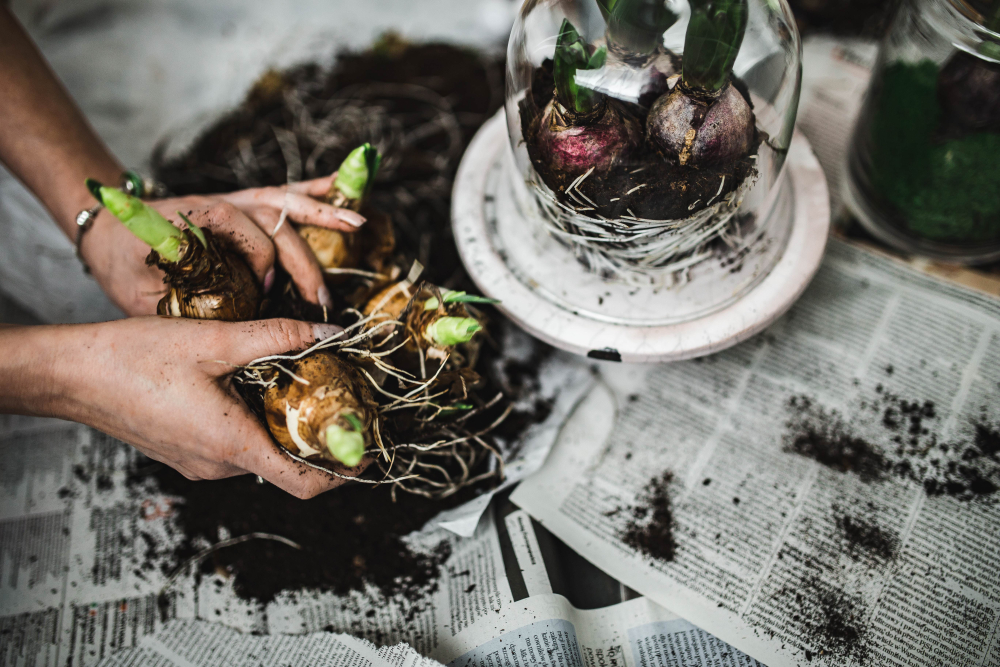
Gardening is a central part of spinstercore. In between solving mysteries, the lovely ladies of spinster fame are found tending to their gardens or entering into flower competitions. But spinstercore doesn’t involve just any old gardening. Carol J. Michel breaks it down in her blog:
“Grandmacore Gardening + Cottagecore Gardening + Hiring Someone to do the heavy lifting = Spinstercore Gardening”
—Beginning My Spinstercore Gardening Era
You can do the heavy lifting yourself, of course. But be assured, outdoor gardening will absolutely call for some heavy lifting. Gardening of any sort requires a lot of effort and attention. It’s not a hobby for the faint of heart. But the rewards are worth it. In fact, the effort is part of what makes gardening good for your mental health.
Why gardening is a healthy hobby
Gardening is calming. It offers a sense of hope for the future and it adds structure to busy lives. The Cleveland Clinic says that gardening is an effective way to manage stress and anxiety. It can even help maintain cognitive function. No wonder so many of our favorite spinsters gardened. And, while I recommend starting with a container garden or a windowsill garden, spending time outdoors in the sun can also improve your overall health and well-being.1
How to get started with spinstercore gardening
As I said, outdoor gardening requires a lot of effort. So I suggest starting small. An herb garden is the ideal way to dip your toes into gardening. You can grow herbs on your counter top, windowsill, or patio. No heavy lifting required. You can always upgrade to an outdoor garden plot if you find your little herb bed isn’t enough to satisfy your spinstercore craving.
Reader’s Digest is my go-to source any time I want an introduction to a new hobby. Their Essential Book of Herbs is the guide you need to choose your herbs, start your garden, harvest your plants, and incorporate them into your food.

Order your copy of Reader’s Digest: The Essential Book of Herbs today.
Of course, if you want to start really small and low-effort, get a self-watering herb garden from Click & Grow:
Baking
On the surface, baking seems like the least essential part of the spinstercore aesthetic. After all, a spinster living alone doesn’t have many people to bake for (or does she…?). But there’s so much more to baking than putting a pie in front of a husband.
Baking connects us to our human history, our ancestry. It’s an invaluable skill, and one that any spinster living in a rural area would have developed. While urban spinsters of the past typically lived in boarding houses, where meals were provided, the country solo woman was definitely doing her own cooking and baking.
Why baking is a healthy hobby
Baking allows you to see something to completion. And, unlike gardening, it offers an almost immediate reward. Instead of waiting a season to see whether or not your flowers bloom, you wait about 20 minutes to make sure the biscuits came out right.

According to NeuroLaunch, baking can even improve your self-confidence. The editorial team writes, “Every time you complete a recipe, your brain updates its model of what you’re capable of. This is self-efficacy, not self-esteem in the vague sense, but a specific belief about your competence in a particular domain.” They go on to explain that the confidence earned by successfully completing a tricky recipe affects other areas of life as well.
So start simply, but continue to push the boundaries of what you can do. Soon, you’ll have trained your brain to see yourself as the competent solo woman you are.
How to get started with spinstercore baking
Before you can attempt a soufflé, you’ll need to lay a strong foundation. If baking is brand-new to you, I recommend starting with the updated 13th edition of the Betty Crocker Cookbook. This is an ideal introduction, as it explains the basics and breaks down the steps (something that more specialized cookbooks and online recipes rarely do).

Start your baking journey by ordering the Betty Crocker Cookbook today.
Be sure to share your creations, too! Start a baking Instagram or join a local baking class to get the most benefit from your new spinstercore hobby.
Needlework
While weaving and spinning are obviously the fiber arts most associated with spinsters, I think we can borrow knitting and crocheting from grannycore for this. That doesn’t mean you need to start with granny squares, though. Elyse Myers recommends starting out with animaguri—small, simple projects you can complete in an afternoon. If you feel the need to start with something more practical, a cross-body phone case or kerchief will work just as well.
Why needlework is a healthy hobby
Like gardening and baking, these spinstercore hobbies offer a range of mental health benefits. Knitters say it helps with stress reduction.2 One study even looked at the effect knitting had on people dealing with long-term illnesses. It found that knitting provided a sense of increased autonomy and quality of life.3 It’s also an effective way for people who don’t see themselves as artistic to express themselves. A 2024 study even found that, “needlecraft has an overwhelmingly positive effect on mental health and general well-being.”4 Perhaps most interesting in the context of our waning attention spans, crocheting appears to improve focus and alertness.5

How to get started with spinstercore needlework
Sadly, the guide that I learned from is out of print. But you can still find The Reader’s Digest Complete Guide to Needlework on used book sites, such as Thriftbooks or on eBay. It’s also available on the Internet Archive.
In its place, I’m suggesting the following beginner guides:
For knitting:

Start knitting quickly by picking up a copy of The Compact Beginner’s Guide to Knitting now.
For crocheting:

Get written and visual instructions in Starting Crochet : Beginners Guide – Learn How to Crochet with Pictures.
For weaving:

Save a bundle by starting with The Cardboard Loom Weaving Bible.
I highly, highly recommend starting with a DIY cardboard loom! It allows you to get a feel for weaving before investing hundreds of dollars in a tabletop heddle loom.
Solving mysteries
And, finally, spinstercore involves solving mysteries. If Miss Marple has taught us anything, it’s that a dedicated spinster can keep her town in order.
Why reading mystery novels is a healthy hobby
In all seriousness, reading mystery stories does offer real benefits. Reading fiction in general can prevent memory loss.6 And reading suspenseful fiction can help with emotional regulation in the form of resilience against stress.7 Mysteries, in particular, require the reader to concentrate and employ analytical thinking. By piecing together clues and sussing out intentions, you’re exercising your brain in a low-stress environment. Author D.L. Ashmore speculates on this in their blog, Can Mystery Novels Improve Your Mental Well-Being?
So if you want to stay sharp as a spinster, consider reading more mysteries.
How to get started with spinstercore sleuthing
There’s no better place to dive into spinstercore mysteries than with Miss Marple herself:

Start sleuthing with Miss Marple : The Complete Short Stories.
With the audio version I’ve recommended, you can listen to mysteries while you garden, bake, or crochet!
Step into your ‘spinstercore era’ today
Whether you’re ready to test out a single spinstercore hobby or dive head-first into all four, you’re sure to be rewarded for your effort.
Do you already garden, bake, crochet, knit, or weave? Are you a mystery aficionado? And, if not, will you give any of these hobbies a try? Share your experience in the comments below.
Footnotes
- https://www.healthline.com/health/healthful-benefits-of-gardening ↩︎
- https://journals.sagepub.com/doi/10.4276/030802213X13603244419077 ↩︎
- https://www.tandfonline.com/doi/abs/10.1080/14427591.2004.9686532 ↩︎
- https://www.tandfonline.com/doi/full/10.1080/01612840.2024.2364228 ↩︎
- https://www.nature.com/articles/s41598-025-88777-9 ↩︎
- https://www.inc.com/jessica-stillman/a-neurologists-secret-weapon-for-keeping-your-memory-sharp-as-you-age-novels.html ↩︎
- (https://anasage.com/the-neuroscience-of-reading-thrillers-why-your-brain-craves-suspense ↩︎


Leave a Reply