As a single woman, you’ve got to plan for your own financial future. This book list is a great place to start.
The Financial Needs of Single, Childfree Women
As I was preparing this financial how-to series, I came across a number of books about women and finances. And you know what I noticed? Not surprisingly, there aren’t many guides for single, childfree women. I found plenty of books about how to merge one’s finances after marriage. There were even more guides for the married woman looking to earn her own income. And bookstores’ shelves are bowing under the weight of the volumes of books devoted to the single mother’s finances.
But for the single or childfree? Close to nothing.
Despite that fact that we’re a rapidly increasing demographic, many publishers don’t seem eager to jump in and fill the void. Perhaps they, like a lot of married-with-children adults, seem to think we single/childfree women have tons of cash lying around, so financial advice isn’t a vital topic. While it’s true the childfree woman doesn’t devote her income to children, that doesn’t mean her finances are simple. Living solo is itself a huge expense, and navigating the murky waters of retirement is a difficult task for anyone.
Spinsters need to manage their money just like anyone else. But books about taking advantage of the tax benefits that come with marriage and dependents don’t help us. We need sound financial information about planning for retirement after a solo career. We need advice about investing on our own. And we could really, really use a few tips on paying a mortgage on a single income.
The good news is, I did find a few helpful guides for the independent woman…
The Financial Book List for Spinsters
On My Own Two Feet: A Modern Girl’s Guide to Personal Finance by Manisha Thakor
If you’re wondering how modern this book can be when it refers to women as girls… I’d just say that titles need to grab attention to sell books. This book simply offers practical advice aimed at single women. I like it because it’s straightforward and honest, backed up by studies and statistics.
The Single Woman’s Guide to Retirement by Jane Cullinane
Retirement may seem far away to some, but for most spinsters, the time to start planning for it was yesterday. This book is written very specifically for the single audience, including statistics on single women and how they (tend to) spend and save. It’s a comprehensive look at the multi-faceted relationships between money, lifestyle, psychology, and culture.
Suddenly Single: Money Skills for Divorcees and Widows by Kerry Hannon
This book teaches financial management for women who have recently become single through the lose of a spouse. It approaches the topic with the assumption that many divorced women and widows were not solely in charge of their finances, and offers advice on taking the reins when they’re abruptly dropped into their hands.
You’re bringing home a paycheck, paying off the bills, and setting money aside every month like a responsible adult. But is that money doing anything other than waiting for a rainy day? Your saved money ought to be earning you more money. If it’s not, it needs to start.
First off, let me say I’m not a financial expert, and I can’t offer any real financial advice. What I can do is share my personal experiences about how to save and grow money when you only have a little bit, and don’t want to run the risk of stock market investing.
1. Open up a savings account.
If you don’t already have one, open a savings account immediately. Interest rates may be low, but you’ll still be earning some money every year by keeping your funds in a savings account.
How does a savings account differ from a checking account? The short answer is that one pays you interest (a percentage of money based on the amount of money you have saved), and the other doesn’t. Typically a checking account is what you’ll pay your bills with, and a savings account is where you’ll put your extra money for safekeeping. You can still withdraw money from a savings account, but there are usually limits to how many such transactions you can make per month.
2. Put your money into a CD.
A Certificate of Deposit is similar to a savings account, but differs in that you agree not to withdraw your money for a certain amount of time. CDs generally offer higher interest rates because the bank can do more with your money when they don’t need to have it available for withdrawal. Your money is still FDIC insured, just as it is in your checking or savings accounts, so you can’t lose it the way you could playing the stock market. If you have a good amount of money saved up that you don’t plan to use for a while, a CD is a good way to earn a little extra interest.
3. Use an online bank.
Internet banks are legitimate banks (assuming they’re FDIC insured– always check), but tend to offer higher interest than regular savings accounts due to their lower overhead costs. If you don’t want to tie your savings up in a CD, or if you only have a small amount to start with, online banks can be an excellent option. Some online banks are exclusively online, while others also have brick-and-mortar locations.
One online bank that has a creative setup is SmartyPig. With SmartyPig, you create “goals” which you can fund on a recurring or sporadic basis. When you reach your goal, you have the option to get a cash boost by withdrawing your funds via gift cards, or you can simply transfer your money plus interest to your regular checking account.
The one thing you shouldn’t do is keep your money in your mattress (well, at least not all of it) or in a no-interest checking account. It may only be an extra few dollars, but every bit counts.
Let’s not beat about the bush; living alone is expensive. While there are many wonderful aspects of living alone, the price tag definitely isn’t one of them. How can middle- to low-income spinsters maintain domestic independence without going broke or renting a room in Cracktown?
1. Plan, Plan, Then Plan Some More
While you don’t want to procrastinate, neither do you want to jump into to a new living situation blind. Take a reasonable amount of time to do your research and figure out what you want. Donna Freedman over at Clark has an excellent outline for anyone looking to move out on their own. Check out her article for some tips on how to
2. Prioritize
I made a post a while back about picking out a safe apartment. But unfortunately, safety often comes at a high cost. Before you do anything, you’ll need to sit down and decide what’s most important to you in terms of housing. Usually you’ll need to consider
Size: How much space do you need?
Cost: How much money can you spend?
Safety: How safe does the area need to be?
Location: How conveniently located does it need to be?
This will vary for everyone to some degree, but the most ideal configuration I’ve found is this:
Safety first. You don’t need to live in a gated community with an armed guard, but living in a safe environment should probably be highest on your list. Crime happens everywhere, but some neighborhoods are more prone to violent crime than others. To learn more about choosing a safe neighborhood, check out this post.
Cost Next. I’d like for cost to be the least important factor, but living on a limited income makes this vital. Make a list of your expenses excluding rent. Now subtract that from your monthly income. Take at least 5% off of that number to compensate for a drop income or unexpected expenses. What you have left is the absolute maximum amount you can spend on rent.
Then Location. Proximity to your job, shopping centers, and family affects other monthly costs like gas and car maintenance. Work the numbers and see if living in an out-of-the-way area will get you more or less of what you want.
And Finally, Size. More space is usually more enjoyable, but unless you have so many possessions that you’d have to pay for storage space should you move to a small space, this will the most flexible of all your needs. A studio apartment that’s all your own can make for a far better life than a five-bedroom, single family home with people you dislike.
But what happens when you don’t have the money you need to get the priorities you’ve set?
3. Make The Numbers Work
Don’t give up! With a little perseverance and creativity, you can have your solo home yet. Here’s how:
Get a roomie. One of the most straight-forward ways to save on living expenses is to live with a roommate. The old adage the two can live as cheaply as one is definitely true when it comes to housing expenses, so splitting your living space can mean halving your bill. There are many ways having a roommate could go wrong, but if you know the person fairly well and have a mutual, detailed roommate agreement, it can end up working very well. Sharing your home with an adult friend can offer more privacy than living with parents, depending on the situation, so having a roomie won’t necessarily rob you of your single freedoms.
Haggle. You can also usually negotiate the cost of rent, whether you’re renting from a legitimate apartment management company or a single person. Apartment complexes sometimes offer discounts for residents working for ‘preferred employers,’ or when their residency rate is low. A little subtle negotiating (for instance, letting them know you’re still looking at other places may make people or companies more inclined to offer a discount) can save you hundreds per year.
Haggle some more. Then there’s negotiating with yourself. The two-bedroom, two-bathroom looked so tempting when the realtor walked you through, and you could technically afford it… but what kind of safety net could you give yourself if you took the studio apartment for $175 less per month? An extra 2k per year looks pretty good compared to extra space that – while you could certainly make use of it – you don’t have any real need for.
Finding a way to live safely on your own without getting into debt is possible. It simply takes a lot of planning and perseverance. And I can say from experience that it’s worth the time and mental fatigue you’ll invest running through all the different mathematical scenarios when you can come home to your very own home.
If you’d like to receive more helpful resources for your single & childfree life, join the American Spinster mailing list:
The idea of a single, childfree woman usually conjures images of a wealthy woman at a high-paying job who attends the gym regularly. She can often be seen with shopping bags in one hand and the latest phone in the other, heading into Starbucks to buy whatever the most expensive coffee on the menu is.
No kids? BUY ALL THE THINGS!
It’s appealing but, for most of us, definitely not reality. In the real world, spinsters need to watch their money just as much as anyone else. That’s why this week and next I’m going to be looking at several of the most important elements of money management for the single, childfree woman.
The Spinster Financial Series
1. How to Live Solo (without going broke)
There are many wonderful aspects of living alone, but the price tag isn’t one of them. The adage that “two can live as cheaply as one” is certainly true in terms of rent or mortgage payments. How can middle- to low-income spinsters maintain domestic independence without going broke?
4. Investing In What You Buy
Every purchase you make can be an investment with the right point of view. Learn how to shift your thought process to make wise decisions, even on “frivolous” purchases.
Is your “Dream Home” Pinterest board languishing while you’re stuck in a studio apartment? Are you longing for the day when you’ll finally be able to create your ideal home in a spacious single-family home?
Spinsters, I have good news. There is only one step in between where you are now and living in your solo dream home. Are you ready for it?
Your one rule is:
Don’t wait.
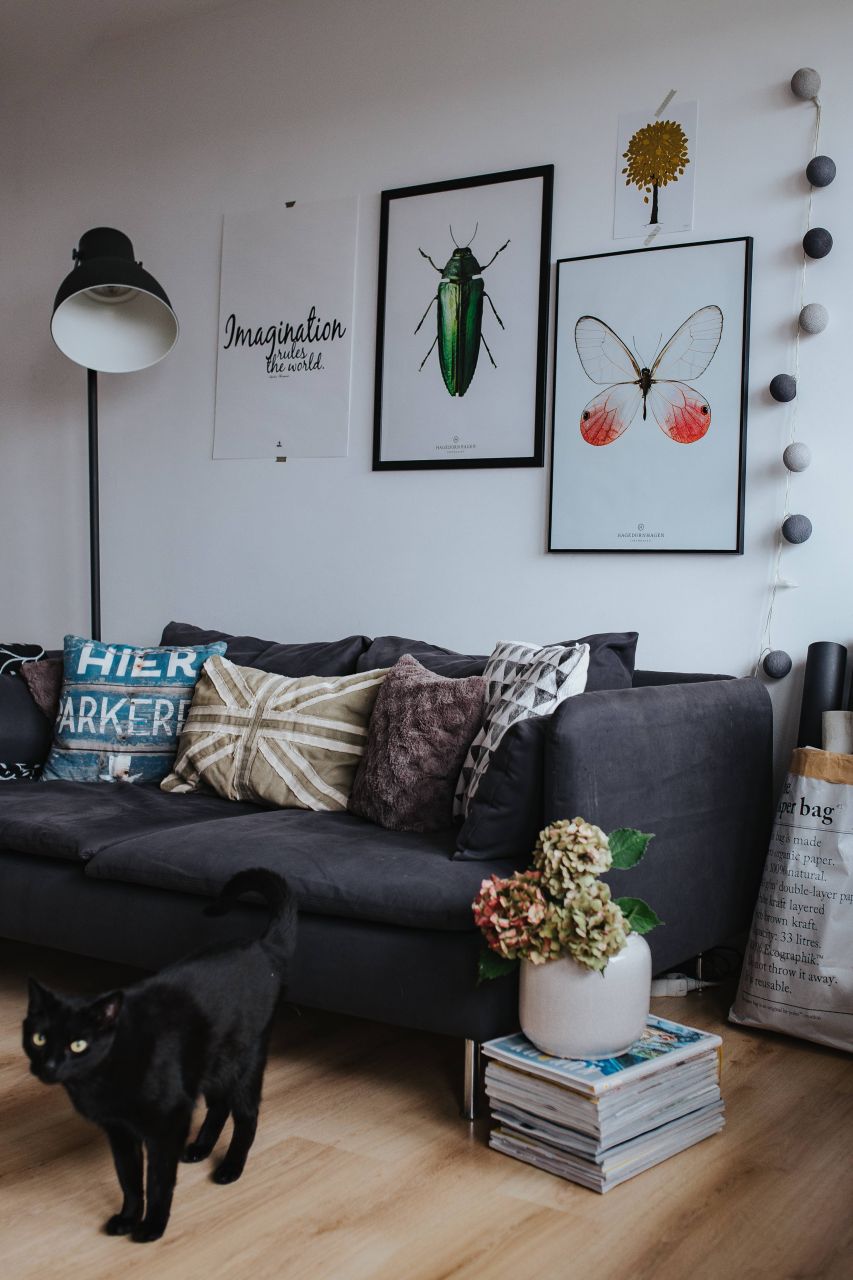
You read that right. Quit waiting for a better home. The one you’re in is ready and waiting to be the bachelorette pad of your dreams.
Decorate. Show off your possessions. It doesn’t matter if you only have a six-month lease. This is your home we’re talking about. Live there. It may seem like really simple advice, but it makes all the difference, and so few people seem to do it. They move their furniture in, maybe hang up a single poster, but that’s it.
Single women waste years of their lives looking at blank walls because they feel like they need to wait for a ‘real’ house before they fall in love with their space. Don’t wish away the space you’re in – make it count. If you’ve got a one-room apartment, make it the most happening, chic loft in town.
But my landlord is really strict!
If you’re afraid of losing your security deposit or violating the terms of your lease, relax. There are plenty of ways for renters to safely add their own style to their home. For instance:
Buy wall stickers (they’re often available at the dollar store).
Frame and hang some pictures.
Go to Habitat for Humanity and find some cheap, good-looking furniture.
Put up curtains. Make them, or buy them from the thrift store. Nothing improves the look of a room faster.
Just. Don’t. Wait.
The important thing is that you don’t wait. Don’t wait for your next apartment, or your first house. You have your very own space, and that’s a true gift. Use it. Make your home somewhere you want to be. Go through your Pinterest “Dream House” board and put some of those ideas into action. Whatever you do, just don’t put it off. Six months turns into a year, and a year turns into five before you realize it. Don’t waste a single week living in what might as well be a hospital room.
Your home doesn’t need to look like a Pottery Barn catalog, it just needs to welcome you. You have permission to create your solo dream home now. You’re an adult, living in your own space. Make it your home.
Are you ready to get started on your solo dream home?
Download The American Spinster’s free mini ebook filled with tips, tricks, and inspiration!
Like this post? Pin it and share it with your friends!
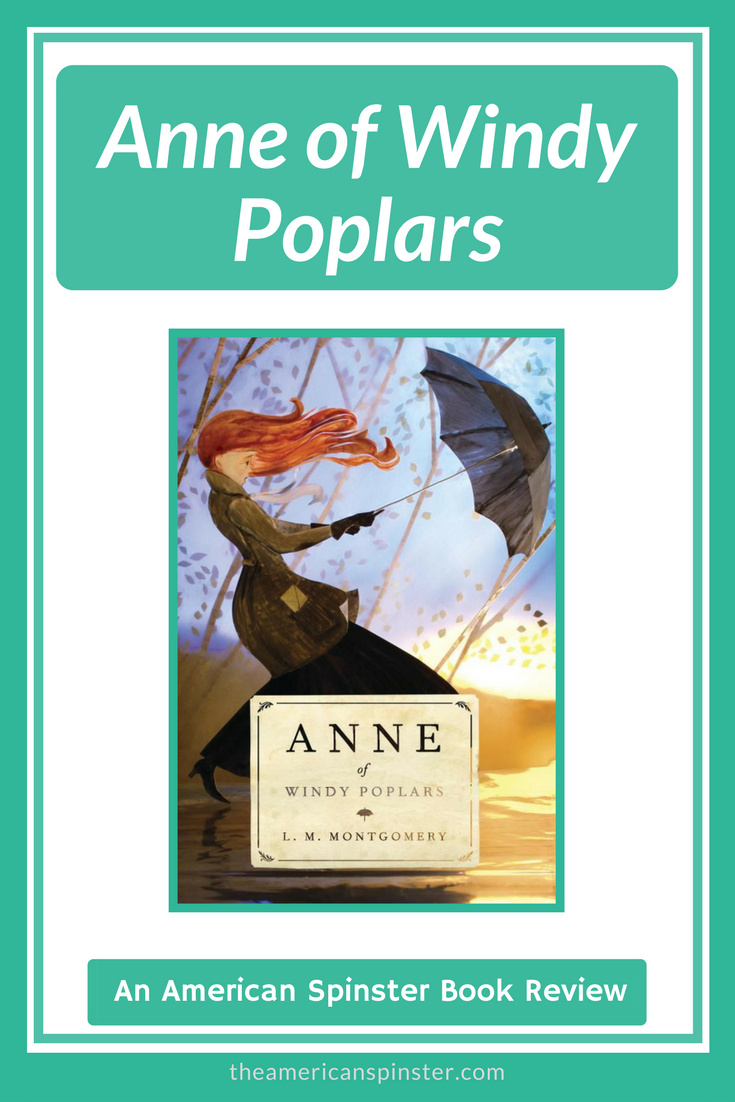
L. M. Montgomery’s Anne of Green Gables is well-known, even if the sequels are not frequently read or remembered. Anne of The Island and Anne of Windy Poplars are the 3rd and 4th books, respectively, and take place after Anne has moved away from home but before she gets married.
So why do these two books about the happily married mother of seven have a place at The American Spinster? Read on…
Anne of the Island
InAnne of the Island, Anne Shirley moves away from her beloved home at Green Gables to study at Redmond College. While women regularly attended colleges in Canada at that time (the late 19th to early 20th centuries), many people still saw it as a waste of time and money to give a woman a higher education. The rationale being that she would simply marry a few years later, making her education useless. Anne herself is accused of going just to “catch a man.” Nothing could be farther from the truth, as Anne spends a fair amount of her time refusing marriage proposals as well as avoiding the advances of her friend Gilbert.
Themes
Although romance takes up a good portion of The Island, the story is, as ever, about Anne’s remarkable outlook on life. Despite being homesick initially, she’s soon reveling in her newfound freedom. One of my favorite moments is when Anne and several friends rent a house together. When the former tenants leave, the women move in and put their personal touches on the place.
“How those young women enjoyed putting their nest together. As [Phillipa] said, it was almost as good as getting married. You had the fun of homemaking without the bother of a husband.”
Throughout the novel, Anne receives several marriage proposals that range from the ridiculous to the insulting, and it’s both sad and humorous to see the way her girlhood ideas about that romantic moment buckle under the weight of reality. Anne manages to take it all in stride and keep a cheerful outlook, at least until Gilbert proposes. Although everyone around her can see that she loves him, Anne is devastated, and refuses him outright, saying he’s ruined everything.
It’s only after the tall, dark, and handsome man of Anne’s dreams makes his proposal that she realizes following the notions of her youth might not be the best way to live one’s adult life. In the end, Anne accepts Gilbert’s proposal, and agrees to wait for him while he completes his education to become a doctor.
Why it makes the list
Anne of the Island is a beautifully-written story of a young woman spreading her wings and enjoying her first taste of independence. While Anne does marry later in the series (and finally accepts a proposal at the end of Island), this doesn’t negate the story’s significance to single women. Anne leaves home on her own, makes friends in a new city, and enjoys herself tremendously. She even gets a house with her single, independent friends. Anne is the epitome of what many girls aspire to become: independent, intelligent, strong-willed, and loving. And in this story we see her continue to pursue and accomplish her dreams – no spouse or baby required.
Anne of Windy Poplars
Anne of Windy Poplars is the chronological continuation of the previous novel. While her fiancee Gilbert is in college, Anne takes a job in Summerside as a school teacher. Much of the novel is told through Anne’s letters to Gilbert, in which she describes her life as a boarder at Windy Poplars. This gives the novel a more episodic structure than many of the others in this series, with several story lines and character arcs. But in this review, I’m only looking at one character’s story…
Characters & Themes
This is probably my favorite installment of the Anne series, because we’re introduced to two resolute spinsters with very different backgrounds and personalities. The first is Rebecca Dew, the long-time servant at Windy Poplars, who has a deep love-hate relationship with the household cat. The second, far more interesting character is Katherine Brooke, Anne’s fellow teacher.
Katherine is a sour person, who seems to go out of her way to annoy Anne and make her unhappy. Anne, however, refuses to let anyone make her bitter, and resolves to win Katherine over. As the book continues, it looks like Anne might really have met her match, and may need to learn to accept the possibility that there are incurably miserable people in her world.
In her final effort, Anne invites Katherine to come home with her to Green Gables over the winter holiday. I won’t give away the details, because it’s a great moment to read, but suffice to say Anne manages to earn Katherine’s friendship, and helps her move into a happier lifestyle.
At the end of the book, Anne heads back to Avonlea to marry Gilbert, saying goodbye to her life as a single woman.
Why it makes the list
The novel was published after the chronological completion of the Anne series, which ended with Rilla of Ingleside, the story of Anne’s daughter. The addition of this book into the cannon probably came as a result of the high demand for more stories about Anne. But whatever the reason, I’m glad Montgomery revisited this time in Anne’s life.
Windy Poplars gives us the details of the time she spent as a working woman. She is once again on her own in a new city. She again has her own private space; a room at a boarding house inhabited exclusively by single women. And, of course, Windy Poplars gives us Katherine.
With Anne’s encouragement, Katherine abandons her unhappy life working as a teacher and leaps right into a life of travel and adventure. She sends Anne a letter describing her new job as a secretary to a traveling M.P. who is, as Anne says, “A person who would say, ‘Let’s go to Egypt,’ as one would say, ‘Let’s go to Charlottetown… and go! That life will just suit Katherine.”
In Summary
For a book series about a woman who marries the perfect man and has the perfect traditional life with the perfect brood of rosy-cheeked babies, the Anne series kicks down barriers and social stereotypes about women quite a bit. When Anne is single, she is happy to be single. She doesn’t accept the first (or second, or third…) proposal she receives, and thinks very long and hard about what will be best for her. And in the end, she chooses not the idealized man of her dreams, but the man who will complement her life the best.
Further, when Anne works her Anne-magic on Katherine, the ‘fix’ for all of Katherine’s woes is not for her to get the kind of life that Anne has. Not once does Anne try to convince Katherine that she’ll be happier with a man in her life. Katherine says she never wanted to get married, and they leave it at that. A century before Frozen, L. M. Montgomery told girls that their ‘happily ever after’ doesn’t have to include a wedding.
And that’s amazing.
We are a participant in the Amazon Services LLC Associates Program, an affiliate advertising program designed to provide a means for us to earn fees by linking to Amazon.com and affiliated sites.
If you’d like to learn about more amazing books that celebrate the single & childfree lifestyle, join the American Spinster mailing list:
I’ve written peripherally about this before, but today I want to devote an entire post to this novel idea. So here it is: You should enjoy your home.
Groundbreaking, isn’t it?
I know it’s not a new idea, but it’s something that people say they do, or want to do, and never actually do. Unless you’ve already paid off your mortgage or bought your home outright, you’re paying probably a large portion of your income to live in your home, and you’re probably not getting your money’s worth. Even if you’re not paying much for the roof over your head, it’s still your respite from the world. It should be a place you absolutely love to be.
Part I: Defining a Happy Home
There are three things you should be able to say about your living space.
1. Your home should be comfortable.
You have a workplace (unless you work from/at home) in which to be uncomfortable. Even if it’s not obvious, stepping into an uncomfortable home environment can really sap the life out of you. This needs to be a welcoming place.
2. It should be restful.
There’s nothing wrong with having a game room (sounds pretty good, actually), but there should be a place in your home where you can relax, whatever relaxing means for you.
3. It should be private.
Sometimes there’s not much you can do about this if you have roommates, but your home should be a place where you can be alone if you want to. That means you have control over the boundaries; no one can show up and enter your home if you don’t want them to.
So how do you get this?
Part II: Creating a Happy Home
How do you create a comfortable, restful, private living environment?
Keep it clean
When I say this, I mean whatever “clean” means to you. If you’re comfortable with a bit of clutter, fine. If you need every last corner to be truly spotless, okay. Mess makes people uncomfortable, so it’s important to keep your home at the level of cleanliness that works for you. I don’t mind visible stacks of papers or collectibles lining the walls of my home. But my stress level rises, however slightly, when dishes pile up or the floor isn’t clear and vacuumed. Determine what your comfort level of cleanliness is, and make time to keep your home at that level.
Keep it energizing.
Again, this can mean very different things for different people. For me, I like quiet. Loud music, background TV, or a howling cat take away from my peace. You might like a more active environment, spending time on the Wii, having friends over, or turning up the volume on a favorite album. Whatever re-energizes you after a long day.
Maintain your boundaries
As I mentioned earlier, this can be difficult when you have roommates, but even then it shouldn’t be impossible to have some control over the comings and goings in your home.
Without Roommates:
If you’re the only inhabitant, this might mean learning to say “no,” which is not an easy task. From our earliest time as humans, our dwellings have been to keep us safe from the outside world, whether from the elements or predators. Today, it might not be a raging tiger after your life, but a raging human being after your peace of mind. You have the right to tell someone that now is not a good time. In fact, you have the right to tell anyone not to come around ever again.
Most of the time, however, this just involves saying, “I’ve got a lot of work to do here at home tonight. How about another time?” And that’s not a lie. Your work happens to be letting yourself get some rest, which is vital to your well-being.
With Roommates:
If you have roommates, offer them a mutually-beneficial agreement regarding guests. This might be that no one has guests over without first telling/asking the other housemate(s). Or it might mean you set up visiting hours. From 5-8 each day, you know you might have other people in your home, but after that, they have to leave. Most people will understand that roommates work different hours, and will respect this arrangement.
At The End of the Day
One of the best parts about being single is having total control over your own space, however big or small it is. The steps listed in this post will help you establish your home. If you want to learn how to transform your current residence into your dream home, see Part II here.
Save
Want to receive FREE resources for living your best single, childfree life? Sign up for our mailing list today!
Welcome to the American Spinster’s Easter Giveaway!
This month, we’re offering the winner their choice of a hand-crafted cuff bracelet featuring the original illustrations of Jennifer Moran. This assortment of delightful jewelry comes from JEsquireCreations via Etsy.
JEsquire Creations offers a varied assortment of jewelry and accessories. The giveaway winner will have their pick of any handmade aluminum cuff bracelet.
What do you have to do for your chance to win one of these gorgeous bangles? Just click the entry button on the Rafflecopter widget below. That’s it!
If you’d like additional chances to win, you can get extra entries by completing other tasks, such as liking JEsquireCreations and The American Spinster on Facebook, or sharing this link with your friends.
The raffle begins on March 11, 2016 at 12:00 AM, and ends on March 31st at 11:59 PM. The winner will be selected randomly by Rafflecopter. Open to US residents only.
While not required, remember to subscribe to this blog for updates on this giveaway and future giveaways.
The American Spinster Review of Maxine Hong Kingston’s The Woman Warrior: Memoirs of a Girlhood Among Ghosts
“Perhaps women were once so dangerous they had to have their feet bound.”
The Woman Warrior is a spellbinding mixture of autobiography, family history, and girlhood fantasies. From the opening section, “No Name Woman,” the story of Kingston’s disowned aunt, to tales of her mother’s time as a village doctor in “Shaman,” Kingston’s book reads like a whispered confession.
As a daughter in a family of Chinese immigrants, Kingston struggles with the conflicting messages her mother gives. Daughters are worthless, slaves, maggots. And yet, her mother also told Kingston and her sisters stories of warrior women, like Fa Mulan. Stories of courageous women who avenged their families and fought better than men.
As a child caught between two cultures, Kingston struggles with her inability to speak for herself and her deep desire to be seen and understood. She knows that, although supposedly considered a worthless girl, she is also supposed to be a warrior and save her people. Who who people are, however, was a mystery to her.
Why It’s a Spinsterly Read
Kingston writes that she and her sisters made up their minds to learn science and mathematics, to never marry or be dependent on a husband, who might someday abandon them. Having grown up with stories of how hopeless their lives would be as girls if the family moved back to China, as well as stories of their mother’s independence as a doctor before she immigrated, they learn that they have to be able to care for themselves if they want to survive.
To avoid the arranged marriage her parents try to set up, she cooks poorly and breaks dishes to prove that she’s not good wife material.
“Even now, unless I’m happy, I burn the food when I cook. I do not feed people. I let the dirty dishes rot. I eat at other people’s tables but won’t invite them to mine, where the dishes are rotting.”
Even when the possibility of marrying is acceptable, she still determines that she won’t let herself be a burden or an excuse.
“No husband of mine will say, ‘I could have been a drummer, but I had to think about the wife and kids. You know how it is.’ Nobody supports me at the expense of his own adventure.”
Kingston’s Woman Warrior: Memoirs of a Girlhood Among Ghosts is an engaging, if unusual, read. Many women will be able to relate to it, regardless of their racial or socioeconomic upbringing. It taps into something fundamentally American, fundamentally female.








 , Anne Shirley moves away from her beloved home at Green Gables to study at Redmond College. While women regularly attended colleges in Canada at that time (the late 19th to early 20th centuries), many people still saw it as a waste of time and money to give a woman a higher education. The rationale being that she would simply marry a few years later, making her education useless. Anne herself is accused of going just to “catch a man.” Nothing could be farther from the truth, as Anne spends a fair amount of her time refusing marriage proposals as well as avoiding the advances of her friend Gilbert.
 is the chronological continuation of the previous novel. While her fiancee Gilbert is in college, Anne takes a job in Summerside as a school teacher. Much of the novel is told through Anne’s letters to Gilbert, in which she describes her life as a boarder at Windy Poplars. This gives the novel a more episodic structure than many of the others in this series, with several story lines and character arcs. But in this review, I’m only looking at one character’s story…