
Happily Single & Childfree

Join the Community!


The American Spinster


  • Growing Your Savings: A Spinster’s Guide To Getting The Most Out Of Interest

    Growing Your Savings: A Spinster’s Guide To Getting The Most Out Of Interest

    You’re bringing home a paycheck, paying off the bills, and setting money aside every month like a responsible adult. But is that money doing anything other than waiting for a rainy day? Your saved money ought to be earning you more money. If it’s not, it needs to start.

    First off, let me say I’m not a financial expert, and I can’t offer any real financial advice. What I can do is share my personal experiences about how to save and grow money when you only have a little bit, and don’t want to run the risk of stock market investing.

    1. Open up a savings account.

    If you don’t already have one, open a savings account immediately. Interest rates may be low, but you’ll still be earning some money every year by keeping your funds in a savings account.

    How does a savings account differ from a checking account? The short answer is that one pays you interest (a percentage of money based on the amount of money you have saved), and the other doesn’t. Typically a checking account is what you’ll pay your bills with, and a savings account is where you’ll put your extra money for safekeeping. You can still withdraw money from a savings account, but there are usually limits to how many such transactions you can make per month.

    2. Put your money into a CD.

    A Certificate of Deposit is similar to a savings account, but differs in that you agree not to withdraw your money for a certain amount of time. CDs generally offer higher interest rates because the bank can do more with your money when they don’t need to have it available for withdrawal. Your money is still FDIC insured, just as it is in your checking or savings accounts, so you can’t lose it the way you could playing the stock market. If you have a good amount of money saved up that you don’t plan to use for a while, a CD is a good way to earn a little extra interest.

    3. Use an online bank.

    Internet banks are legitimate banks (assuming they’re FDIC insured– always check), but tend to offer higher interest than regular savings accounts due to their lower overhead costs. If you don’t want to tie your savings up in a CD, or if you only have a small amount to start with, online banks can be an excellent option. Some online banks are exclusively online, while others also have brick-and-mortar locations.

    One online bank that has a creative setup is SmartyPig. With SmartyPig, you create “goals” which you can fund on a recurring or sporadic basis. When you reach your goal, you have the option to get a cash boost by withdrawing your funds via gift cards, or you can simply transfer your money plus interest to your regular checking account.

    The one thing you shouldn’t do is keep your money in your mattress (well, at least not all of it) or in a no-interest checking account. It may only be an extra few dollars, but every bit counts.

    Save

    Leave a Reply

    Your email address will not be published. Required fields are marked *

    This site uses Akismet to reduce spam. Learn how your comment data is processed.


  • How to Live Solo (without going broke)

    How to Live Solo (without going broke)

    Let’s not beat about the bush; living alone is expensive. While there are many wonderful aspects of living alone, the price tag definitely isn’t one of them. How can middle- to low-income spinsters maintain domestic independence without going broke or renting a room in Cracktown?

    1. Plan, Plan, Then Plan Some More

    While you don’t want to procrastinate, neither do you want to jump into to a new living situation blind. Take a reasonable amount of time to do your research and figure out what you want. Donna Freedman over at Clark has an excellent outline for anyone looking to move out on their own. Check out her article for some tips on how to

    2. Prioritize

    I made a post a while back about picking out a safe apartment. But unfortunately, safety often comes at a high cost. Before you do anything, you’ll need to sit down and decide what’s most important to you in terms of housing. Usually you’ll need to consider

    • Size: How much space do you need?
    • Cost: How much money can you spend?
    • Safety: How safe does the area need to be?
    • Location: How conveniently located does it need to be?

    This will vary for everyone to some degree, but the most ideal configuration I’ve found is this:

    1. Safety first. You don’t need to live in a gated community with an armed guard, but living in a safe environment should probably be highest on your list. Crime happens everywhere, but some neighborhoods are more prone to violent crime than others. To learn more about choosing a safe neighborhood, check out this post.
    2. Cost Next. I’d like for cost to be the least important factor, but living on a limited income makes this vital. Make a list of your expenses excluding rent. Now subtract that from your monthly income. Take at least 5% off of that number to compensate for a drop income or unexpected expenses. What you have left is the absolute maximum amount you can spend on rent.
    3. Then Location. Proximity to your job, shopping centers, and family affects other monthly costs like gas and car maintenance. Work the numbers and see if living in an out-of-the-way area will get you more or less of what you want.
    4. And Finally, Size. More space is usually more enjoyable, but unless you have so many possessions that you’d have to pay for storage space should you move to a small space, this will the most flexible of all your needs. A studio apartment that’s all your own can make for a far better life than a five-bedroom, single family home with people you dislike.

    But what happens when you don’t have the money you need to get the priorities you’ve set?

    How to Live Solo Without Going Broke

    3. Make The Numbers Work

    Don’t give up! With a little perseverance and creativity, you can have your solo home yet. Here’s how:

    Get a roomie. One of the most straight-forward ways to save on living expenses is to live with a roommate. The old adage the two can live as cheaply as one is definitely true when it comes to housing expenses, so splitting your living space can mean halving your bill. There are many ways having a roommate could go wrong, but if you know the person fairly well and have a mutual, detailed roommate agreement, it can end up working very well. Sharing your home with an adult friend can offer more privacy than living with parents, depending on the situation, so having a roomie won’t necessarily rob you of your single freedoms.

    Haggle. You can also usually negotiate the cost of rent, whether you’re renting from a legitimate apartment management company or a single person. Apartment complexes sometimes offer discounts for residents working for ‘preferred employers,’ or when their residency rate is low. A little subtle negotiating (for instance, letting them know you’re still looking at other places may make people or companies more inclined to offer a discount) can save you hundreds per year.

    Haggle some more. Then there’s negotiating with yourself. The two-bedroom, two-bathroom looked so tempting when the realtor walked you through, and you could technically afford it… but what kind of safety net could you give yourself if you took the studio apartment for $175 less per month? An extra 2k per year looks pretty good compared to extra space that – while you could certainly make use of it – you don’t have any real need for.

    Finding a way to live safely on your own without getting into debt is possible. It simply takes a lot of planning and perseverance. And I can say from experience that it’s worth the time and mental fatigue you’ll invest running through all the different mathematical scenarios when you can come home to your very own home.


    How to Live Solo (without going broke)


    If you’d like to receive more helpful resources for your single & childfree life, join the American Spinster mailing list:


    Save


  • The Spinster Financial Series

    The Spinster Financial Series

    The idea of a single, childfree woman usually conjures images of a wealthy woman at a high-paying job who attends the gym regularly. She can often be seen with shopping bags in one hand and the latest phone in the other, heading into Starbucks to buy whatever the most expensive coffee on the menu is.

    It’s appealing but, for most of us, definitely not reality. In the real world, spinsters need to watch their money just as much as anyone else. That’s why this week and next I’m going to be looking at several of the most important elements of money management for the single, childfree woman.

    The Spinster Financial Series

    1. How to Live Solo (without going broke)
    There are many wonderful aspects of living alone, but the price tag isn’t one of them. The adage that “two can live as cheaply as one” is certainly true in terms of rent or mortgage payments. How can middle- to low-income spinsters maintain domestic independence without going broke?

    2. Growing Your Savings: A Spinster’s Guide To Getting The Most Out Of Interest
    You work hard for the money, so it’s time to make it work for you. This post covers how to safely invest your money, especially when you don’t have a lot to play with.

    3. The Financial Book List for Single, Childfree Women
    For this week’s Spinsterly Read post, I’ve compiled a list of the most helpful books on finance for single and childfree women.

    4. Investing In What You Buy
    Every purchase you make can be an investment with the right point of view. Learn how to shift your thought process to make wise decisions, even on “frivolous” purchases.

    5. Wishing Your Way To Financial Freedom: The Disney Princess Method of Financial Planning
    Disney gets a lot of flack for the old-school morals promoted in their older princess films. But were they actually on to something?

    6. Why Having Kids is Not a Retirement Plan
    Here’s why “but who will take care of you when you’re older” is never a valid question.


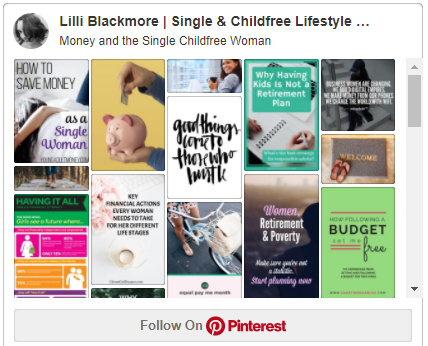
    Want to see more financial tips and tutorials from The American Spinster? Follow us on Pinterest.

    The American Spinster on Pinterest

    Save

    Leave a Reply

    Your email address will not be published. Required fields are marked *

    This site uses Akismet to reduce spam. Learn how your comment data is processed.


  • Spinster How-To: Buying Car Insurance

    Spinster How-To: Buying Car Insurance

    American Spinster How-To: Buying Car Insurance

    I was going to post something different today, but last night I was involved in a hit-and-run accident, and the fact that I had the right insurance saved me a lot of money and grief.

    If you own a car, you need insurance. Many insurance companies today let you build your own policy, advertising incredibly low prices. Be careful of these. They’re not bad companies, but that initial, look-how-much-you-can-save policy they show you when you visit their website probably won’t be enough to protect you.

    So what do you need?

    Please note: This is just a brief overview to get you started. Laws vary from state to state, so you’ll need to check the requirements in your state. This How-To is meant to give you the vocabulary and rudimentary education you need to ask educated questions of your provider to make an informed decision.

    Collision
    Collision insurance covers you if you’re involved in a collision with a car or something else, such as a telephone pole or building.

    Comprehensive
    This covers you for things such as a tree falling on your car, or other accidents that aren’t generally the result of a car accident. A rule-of-thumb way to think about this is that comprehensive insurance covers you for things that happen to your car when you’re not in it. “Comprehensive” is a broad term, so be careful to read the fine print on your policy to see what it actually covers.

    Personal Liability
    This covers the cost of medical bills to the other car’s driver and passengers if you are at fault in an accident.

    Uninsured/Underinsured Motorist Property Damage
    This covers your damages if you’re involved in an accident with an uninsured driver, or a driver whose insurance won’t cover the cost of all the damage.

    Not all states require all types of insurance, though all states require that you have insurance of some sort. There may be something required in your state that’s not even listed here. When deciding what you want to buy, you’ll want to consider the premium (amount you pay per month for insurance), the deductibles, the value of your car, and any other requirements that may apply in your situation.

    Deductibles
    Pay attention to your deductibles. That’s the amount of money you’ll have to pay out of pocket before your insurance company picks up the tab. If there’s, for example, if you have a $500 deductible for collision insurance, and you’re in a collision that causes $3000 worth of damage to your vehicle, you’ll only have to pay the first $500 dollars. Generally speaking, the lower your deductible (less money you have to pay before your insurance takes over), the higher your insurance premium. You’ll have to decide what the best balance of monthly cost and potential out-of-pocket expense is for you.

    The Value Of Your Vehicle
    If your car is worth very little, you probably won’t want to pay a high monthly premium. In some cases, the cost of damage to your car in an accident may be more than your car is worth, making some elements, such as collision, less important to you.

    Is Your Vehicle Paid Off?
    If you’re still paying off your car loan, you may be required to have a certain type of insurance, such as collision. Check with your lender to see if they have any special requirements.

    When choosing your own insurance, you have the option to give yourself a low monthly premium, but often at the cost of better coverage. Fortunately, you can often choose how much coverage you want for each element, and how high or low your deductible is.

    The bottom line is, no matter how careful a driver you are, accidents still happen. You may be the victim of another driver, or your car could be damaged by a natural disaster. Your car could also be damaged by someone breaking into it in an attempt to steal valuables. The right insurance will protect you from all of this at a fairly low cost. Be sure to answer all questions truthfully, and always make your payments on time. If you should get into an accident with lapsed insurance, your provider may not have to cover you.

    Once you’ve purchased your insurance, make sure you keep your insurance card in your car or in your wallet. Most companies will send you two identical cards, meaning you can keep one on you at all times, and the other in your car.

    Finally, when all of that is taken care of, enjoy. You’re a responsible adult with a car and insurance. Drive safely, have fun.


    Save

    Save

    Leave a Reply

    Your email address will not be published. Required fields are marked *

    This site uses Akismet to reduce spam. Learn how your comment data is processed.