One of the most common questions I get when people learn I’m childfree is, “Who’s going to take care of you when you’re older?” The presumption is that by having children, one is guaranteed to have an end-of-life caregiver.
The problem is, it rarely works out that way. So not only is having kids for such a self-serving reason selfish, it’s also downright irresponsible.
Here are the reasons that having kids is NOT a retirement plan.
1. You Don’t Need Kids to Have Happy Golden Years
Earlier this year, one of my company’s clients became terminally ill. She was a single woman with no children. As her illness progressed I would regularly hear my co-workers say things like, “I feel so bad for Ann. She never had any kids… no one to take care of her now.” To me, this was a perfect example of the confirmation bias people have when viewing childfree women. Because Ann actually had a truly devoted friend and caretaker who saw her through everything. Her friend was a younger woman who was in no way related to her and in no way obligated to take care of her during her illness. And yet she managed all of Ann’s finances and the details of her life for no payment. They were friends, and that’s what friends do.
It always make me wonder how unlovable people think they are to believe that they must bind someone to care for them through filial obligation.
2. Having Kids Is No Guarantee of Care
I can say for a fact that Ann was cared for much better than many elderly mothers I’ve come into contact with during my career. If you’ve ever known an older parent, you know what I’m talking about. Poor old mom sits lonely in a nursing home while her children have the nerve to mind their own lives and care for their own young children. Or worse, she’s abused or abandoned.
3. Kids Are Not Responsible End-of-Life Planning
The final major flaw with this line of thinking is that, frankly, it’s a bit irresponsible. There’s no reason most adults should depend on their kids to give them money, comfort, or companionship.
Because here’s the thing: kids grow up to be humans. (Okay, they’re always humans, but most of us don’t see them as actual individuals until they age-out of childhood.)
Having children so you don’t have to make provisions for your own future is lazy and selfish. And probably one of the reasons your grown kids (if you have them) will come to resent you.
What You Should Do Instead
If you don’t have children, consider not having them. Take a portion of the fortune you’d spend on raising a child and invest it in your future. I mean literally invest it. Like through a bank or an investment company. Instead of relying on someone else, rely on yourself! Make all of your own decisions, including the kind of allowance you’ll give yourself in your retirement or possible illness.
Instead of creating children and then planning to be a financial burden to them later in life, just create your own financial freedom. As to having another person by your side to help you navigate those waters when they arise, come on. You are not such an unlovable person that you need to resort to guilt-tripping a child to avoid end-of-life neglect. People end up alone when their kids abandon them because they invested everything (emotional and financial) into one person who never agreed that they owed them anything.
If you don’t want to end up alone, be kind and have friends. If you don’t want to end up broke, start planning your retirement and end-of-life finances now.
Whatever you do, don’t plan to be a financial and emotional burden to someone who never signed up for that.
Want to receive FREE resources for living your best single, childfree life? Sign up for our mailing list today!
Can I tell you a secret? I’m actually a pretty big Disney fan.
I know that nowadays we look back on the old Disney princess movies and say how un-feminist they are, but I think that’s a bit of an over-generalization. None of the princesses actually wait around passively for a rescuer (unless you count Sleeping Beauty, but come on. She was in a magic-induced coma). Most are very active in pursuing their dreams. And yet the vision of them as passive remains.
I think this is due to one simple factor:
“The Dream that You Wish Will Come True”
Each of the Disney princesses – including Tiana – wishes for her dream to come true. And though all of them – not just Tiana – work for that dream as well, somehow that part gets forgotten. The spotlight is instead cast on the wishing/dreaming element as though it were the only part of their characters.
But it’s the belief that dreams will come true that I want to defend today. Walt Disney (see: one of the world’s most successful entrepreneurs ever) was a big believer that faith in one’s dreams will make them real. And his financial success was no simple stroke of luck. Whether you love him or hate him, you’ve got to admit he was a ridiculously tenacious, hardworking businessman. So why did he say he saw himself as Cinderella? The Disney princess most degraded for her supposed passivity and reliance on miracles?
When Wishes and Hard Work Come Together
Screenprism explains the interconnectedness of Cinderella’s hard work and her belief in her dreams.
In a nutshell, Cinderella presented the same message that The Princess and the Frog spelled out decades later: If you work hard and have unshakable faith in your dreams, they’ll come true.
Why Believing in Dreams is Vital to Success
As any good financial coach will tell you, achieving your goals requires more than just working hard. You have got to have rock-solid belief in the fact that, if you stay the course and never let doubt lead you astray, your dreams will come true. Walt Disney believed this fully, and that message is evident in most of his films. Not convinced? Let me show you.
The Little Mermaid
Ariel wants to be a human. For years before the movie opens, she dreams about being human. She spends hours in her grotto wishing for the life she wants. And, though she doesn’t seem to know how becoming human would be possible, she does what she can by collecting every human artifact she can find, and learning all she can about human culture. After meeting Prince Eric, she finds the determination to make her dream come true (even though she makes some pretty bad choices trying to get there).
Beauty and the Beast
Belle wants a life of adventure outside her little town, and to find someone who understands her for who she is, rather than seeing her as the town oddball. Although fate can be thanked for the circumstances that lead her to the Beast’s castle, it’s her unyielding determination and refusal to be cowed or manipulated, as well as her unwavering belief that life holds something wonderful for her that wins over the Beast, leading to her happily ever after.
Aladdin
Jasmine knows she wants the freedom to choose her own life, and actually runs away to do it. Even when she’s back in the palace, she continues to stand up for herself, shaming the Sultan, Aladdin, and Jafar for continuing to decide her future. It’s her steadfast insistence, not Aladdin’s antics, that finally convinces her father to allow her to marry whomever she wants.
The Princess and the Frog
Though not as maligned as the earlier princesses, I want to include Tiana here as well. She’s the first Disney princess to make establishing capitol one of her main goals. She dreams of opening a restaurant, and works toward that with a single-mindedness that’s inspiring. But, due to the ever-present injustice in the world, even she needs a little help from faith and miracles to obtain her dream.
The Value of Believing
Are there problems with the princesses and their stories? Of course. But I think as a culture we’re throwing the baby out with the bathwater when we pretend that the faith, determination, and perseverance to believe in one’s dreams aren’t just as important as clocking in every day for the 9-5. The Disney princesses (excepting perhaps Snow White and Aurora) know what they want and hold on to their dreams as if their lives depend on them. They make difficult choices to obtain their goals, and follow through with them until the end.
Ultimately it’s their earnest belief that their dreams will come true that leads to their happy endings. Even when all seems lost, none of our heroines give up. They’re convinced that if they just keep going, their dreams will come true. That’s the message that Walt Disney shared.
If you want financial success (as well as any other kind of success), you’ve got to take the princess’ message to heart:
“If you keep on believing, the dream that you wish will come true.”
Every item you purchase can be an investment, from a loaf of bread to a new computer. So what are the best ways to invest when you buy?
Food
Food is pretty much a one-time deal. You buy it, eat it, and that’s the end of that money. However, what you eat isn’t just a temporary fuel source. Just like a car, the quality of what goes in plays a part in how long and how well it stays running. Not to get preachy here, but even though you can eat a bowl of ramen for 20 cents, that’s sort of like funneling bootleg whiskey into your gas tank. It’ll keep you going, but does more harm than good in the long run.
Organic is out of my price range, and I’ll admit to eating my fair share of cheap, hyper-processed noodles. But I also try to balance that out with healthier options. Less expensive fruit like bananas still give your body ample nutrition. If you like salad, try mixing cheap iceberg lettuce with more nutritious Romaine and green leaf, so you can eat it every day.
Your body is the one thing that will be with you all of your life, so it’s your most important investment.
Living Space
This one is obvious if you’re living in your own home, as real estate can be a great investment. But what if you rent? You may not be investing money in the traditional way, since you’re not going to own a rented home. But since a large portion of your monthly income is going toward rent, you should make sure you’re getting your money’s worth.
Clothes
There are so many ways to invest in good clothes. My preferred way is to spend very little on new-looking clothes from consignment and thrift shops. It doesn’t matter how quickly I destroy them, since I only paid about a tenth of the original cost. Of course, you can also buy new from reputable retailers. Land’s End and L. L. Bean, for instance, offer lifetime guarantees on their clothing.
When it comes to investing in clothes, price and durability aren’t the only important aspects. Another element of long-sighted clothes buying is limiting your trendy purchases. By all means, go buy that cut of jeans that’s popular right now. But maybe limit it to just one pair, because in a year and a half, they’ll be out of style. Is anyone (besides unfashionable me) wearing Gauchos anymore? Nope. They’ve fallen out of style. So no matter how well they’ve lasted, they’re still folded up in someone’s closet.
Technology
What about buying things that depreciate rapidly, but are pretty much necessities? Computers and other technology fit the bill here. My best advice is to buy as new as you can, bearing in mind the possibility of updates and the items overall utilitarianism once it’s become outmoded. I recently bought a new laptop, and it cost me quite a bit. But, unless an unprecedented technological explosion happens, it’ll serve me for at least the next few years before it become decrepit and unusable. I also chose to buy a laptop, so it’s more functional for the money I spent.
Collectibles
And then there are the other things. Items that appreciate in value. Mostly, these are going to be collectibles. For people who have a beloved collection they like to add to, don’t worry too much about spending the money. As long as it’s not coming out of money earmarked for savings or regular expenses, you’re still investing that money. You may never want to sell, but it’s still a smarter purchase than over-priced convenience food that has absolutely no value once you purchase it.
No matter how well you save, you’re going to have to spend money on a very regular basis. But if you keep these things in mind, your purchases, even the ‘disposable’ ones like food, can be well-planned to give you the best possible future.
As a single woman, you’ve got to plan for your own financial future. This book list is a great place to start.
The Financial Needs of Single, Childfree Women
As I was preparing this financial how-to series, I came across a number of books about women and finances. And you know what I noticed? Not surprisingly, there aren’t many guides for single, childfree women. I found plenty of books about how to merge one’s finances after marriage. There were even more guides for the married woman looking to earn her own income. And bookstores’ shelves are bowing under the weight of the volumes of books devoted to the single mother’s finances.
But for the single or childfree? Close to nothing.
Despite that fact that we’re a rapidly increasing demographic, many publishers don’t seem eager to jump in and fill the void. Perhaps they, like a lot of married-with-children adults, seem to think we single/childfree women have tons of cash lying around, so financial advice isn’t a vital topic. While it’s true the childfree woman doesn’t devote her income to children, that doesn’t mean her finances are simple. Living solo is itself a huge expense, and navigating the murky waters of retirement is a difficult task for anyone.
Spinsters need to manage their money just like anyone else. But books about taking advantage of the tax benefits that come with marriage and dependents don’t help us. We need sound financial information about planning for retirement after a solo career. We need advice about investing on our own. And we could really, really use a few tips on paying a mortgage on a single income.
The good news is, I did find a few helpful guides for the independent woman…
The Financial Book List for Spinsters
On My Own Two Feet: A Modern Girl’s Guide to Personal Finance by Manisha Thakor
If you’re wondering how modern this book can be when it refers to women as girls… I’d just say that titles need to grab attention to sell books. This book simply offers practical advice aimed at single women. I like it because it’s straightforward and honest, backed up by studies and statistics.
The Single Woman’s Guide to Retirement by Jane Cullinane
Retirement may seem far away to some, but for most spinsters, the time to start planning for it was yesterday. This book is written very specifically for the single audience, including statistics on single women and how they (tend to) spend and save. It’s a comprehensive look at the multi-faceted relationships between money, lifestyle, psychology, and culture.
Suddenly Single: Money Skills for Divorcees and Widows by Kerry Hannon
This book teaches financial management for women who have recently become single through the lose of a spouse. It approaches the topic with the assumption that many divorced women and widows were not solely in charge of their finances, and offers advice on taking the reins when they’re abruptly dropped into their hands.
You’re bringing home a paycheck, paying off the bills, and setting money aside every month like a responsible adult. But is that money doing anything other than waiting for a rainy day? Your saved money ought to be earning you more money. If it’s not, it needs to start.
First off, let me say I’m not a financial expert, and I can’t offer any real financial advice. What I can do is share my personal experiences about how to save and grow money when you only have a little bit, and don’t want to run the risk of stock market investing.
1. Open up a savings account.
If you don’t already have one, open a savings account immediately. Interest rates may be low, but you’ll still be earning some money every year by keeping your funds in a savings account.
How does a savings account differ from a checking account? The short answer is that one pays you interest (a percentage of money based on the amount of money you have saved), and the other doesn’t. Typically a checking account is what you’ll pay your bills with, and a savings account is where you’ll put your extra money for safekeeping. You can still withdraw money from a savings account, but there are usually limits to how many such transactions you can make per month.
2. Put your money into a CD.
A Certificate of Deposit is similar to a savings account, but differs in that you agree not to withdraw your money for a certain amount of time. CDs generally offer higher interest rates because the bank can do more with your money when they don’t need to have it available for withdrawal. Your money is still FDIC insured, just as it is in your checking or savings accounts, so you can’t lose it the way you could playing the stock market. If you have a good amount of money saved up that you don’t plan to use for a while, a CD is a good way to earn a little extra interest.
3. Use an online bank.
Internet banks are legitimate banks (assuming they’re FDIC insured– always check), but tend to offer higher interest than regular savings accounts due to their lower overhead costs. If you don’t want to tie your savings up in a CD, or if you only have a small amount to start with, online banks can be an excellent option. Some online banks are exclusively online, while others also have brick-and-mortar locations.
One online bank that has a creative setup is SmartyPig. With SmartyPig, you create “goals” which you can fund on a recurring or sporadic basis. When you reach your goal, you have the option to get a cash boost by withdrawing your funds via gift cards, or you can simply transfer your money plus interest to your regular checking account.
The one thing you shouldn’t do is keep your money in your mattress (well, at least not all of it) or in a no-interest checking account. It may only be an extra few dollars, but every bit counts.
Let’s not beat about the bush; living alone is expensive. While there are many wonderful aspects of living alone, the price tag definitely isn’t one of them. How can middle- to low-income spinsters maintain domestic independence without going broke or renting a room in Cracktown?
1. Plan, Plan, Then Plan Some More
While you don’t want to procrastinate, neither do you want to jump into to a new living situation blind. Take a reasonable amount of time to do your research and figure out what you want. Donna Freedman over at Clark has an excellent outline for anyone looking to move out on their own. Check out her article for some tips on how to
2. Prioritize
I made a post a while back about picking out a safe apartment. But unfortunately, safety often comes at a high cost. Before you do anything, you’ll need to sit down and decide what’s most important to you in terms of housing. Usually you’ll need to consider
Size: How much space do you need?
Cost: How much money can you spend?
Safety: How safe does the area need to be?
Location: How conveniently located does it need to be?
This will vary for everyone to some degree, but the most ideal configuration I’ve found is this:
Safety first. You don’t need to live in a gated community with an armed guard, but living in a safe environment should probably be highest on your list. Crime happens everywhere, but some neighborhoods are more prone to violent crime than others. To learn more about choosing a safe neighborhood, check out this post.
Cost Next. I’d like for cost to be the least important factor, but living on a limited income makes this vital. Make a list of your expenses excluding rent. Now subtract that from your monthly income. Take at least 5% off of that number to compensate for a drop income or unexpected expenses. What you have left is the absolute maximum amount you can spend on rent.
Then Location. Proximity to your job, shopping centers, and family affects other monthly costs like gas and car maintenance. Work the numbers and see if living in an out-of-the-way area will get you more or less of what you want.
And Finally, Size. More space is usually more enjoyable, but unless you have so many possessions that you’d have to pay for storage space should you move to a small space, this will the most flexible of all your needs. A studio apartment that’s all your own can make for a far better life than a five-bedroom, single family home with people you dislike.
But what happens when you don’t have the money you need to get the priorities you’ve set?
3. Make The Numbers Work
Don’t give up! With a little perseverance and creativity, you can have your solo home yet. Here’s how:
Get a roomie. One of the most straight-forward ways to save on living expenses is to live with a roommate. The old adage the two can live as cheaply as one is definitely true when it comes to housing expenses, so splitting your living space can mean halving your bill. There are many ways having a roommate could go wrong, but if you know the person fairly well and have a mutual, detailed roommate agreement, it can end up working very well. Sharing your home with an adult friend can offer more privacy than living with parents, depending on the situation, so having a roomie won’t necessarily rob you of your single freedoms.
Haggle. You can also usually negotiate the cost of rent, whether you’re renting from a legitimate apartment management company or a single person. Apartment complexes sometimes offer discounts for residents working for ‘preferred employers,’ or when their residency rate is low. A little subtle negotiating (for instance, letting them know you’re still looking at other places may make people or companies more inclined to offer a discount) can save you hundreds per year.
Haggle some more. Then there’s negotiating with yourself. The two-bedroom, two-bathroom looked so tempting when the realtor walked you through, and you could technically afford it… but what kind of safety net could you give yourself if you took the studio apartment for $175 less per month? An extra 2k per year looks pretty good compared to extra space that – while you could certainly make use of it – you don’t have any real need for.
Finding a way to live safely on your own without getting into debt is possible. It simply takes a lot of planning and perseverance. And I can say from experience that it’s worth the time and mental fatigue you’ll invest running through all the different mathematical scenarios when you can come home to your very own home.
If you’d like to receive more helpful resources for your single & childfree life, join the American Spinster mailing list:
The idea of a single, childfree woman usually conjures images of a wealthy woman at a high-paying job who attends the gym regularly. She can often be seen with shopping bags in one hand and the latest phone in the other, heading into Starbucks to buy whatever the most expensive coffee on the menu is.
No kids? BUY ALL THE THINGS!
It’s appealing but, for most of us, definitely not reality. In the real world, spinsters need to watch their money just as much as anyone else. That’s why this week and next I’m going to be looking at several of the most important elements of money management for the single, childfree woman.
The Spinster Financial Series
1. How to Live Solo (without going broke)
There are many wonderful aspects of living alone, but the price tag isn’t one of them. The adage that “two can live as cheaply as one” is certainly true in terms of rent or mortgage payments. How can middle- to low-income spinsters maintain domestic independence without going broke?
4. Investing In What You Buy
Every purchase you make can be an investment with the right point of view. Learn how to shift your thought process to make wise decisions, even on “frivolous” purchases.
I was going to post something different today, but last night I was involved in a hit-and-run accident, and the fact that I had the right insurance saved me a lot of money and grief.
If you own a car, you need insurance. Many insurance companies today let you build your own policy, advertising incredibly low prices. Be careful of these. They’re not bad companies, but that initial, look-how-much-you-can-save policy they show you when you visit their website probably won’t be enough to protect you.
So what do you need?
Please note: This is just a brief overview to get you started. Laws vary from state to state, so you’ll need to check the requirements in your state. This How-To is meant to give you the vocabulary and rudimentary education you need to ask educated questions of your provider to make an informed decision.
Collision
Collision insurance covers you if you’re involved in a collision with a car or something else, such as a telephone pole or building.
Comprehensive
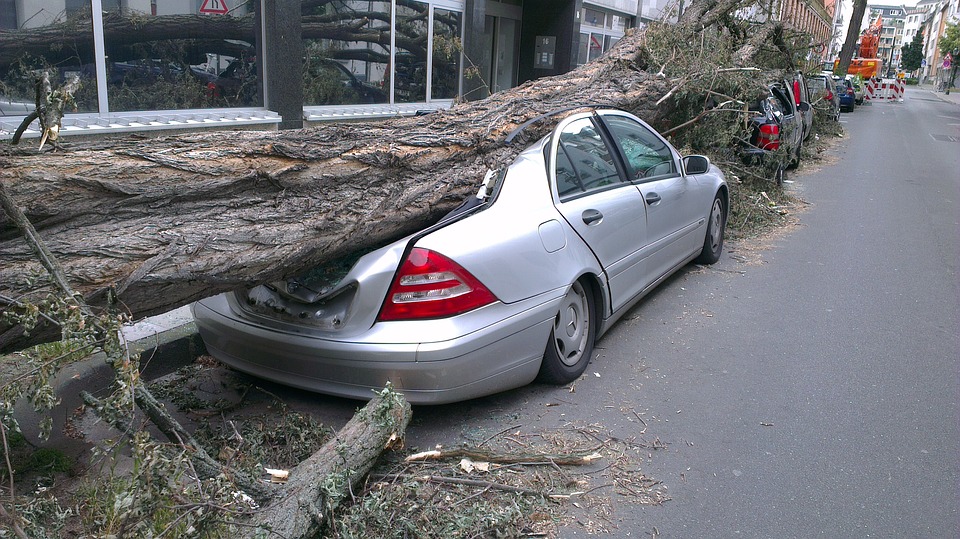
This covers you for things such as a tree falling on your car, or other accidents that aren’t generally the result of a car accident. A rule-of-thumb way to think about this is that comprehensive insurance covers you for things that happen to your car when you’re not in it. “Comprehensive” is a broad term, so be careful to read the fine print on your policy to see what it actually covers.
Personal Liability
This covers the cost of medical bills to the other car’s driver and passengers if you are at fault in an accident.
Uninsured/Underinsured Motorist Property Damage
This covers your damages if you’re involved in an accident with an uninsured driver, or a driver whose insurance won’t cover the cost of all the damage.
Not all states require all types of insurance, though all states require that you have insurance of some sort. There may be something required in your state that’s not even listed here. When deciding what you want to buy, you’ll want to consider the premium (amount you pay per month for insurance), the deductibles, the value of your car, and any other requirements that may apply in your situation.
Deductibles
Pay attention to your deductibles. That’s the amount of money you’ll have to pay out of pocket before your insurance company picks up the tab. If there’s, for example, if you have a $500 deductible for collision insurance, and you’re in a collision that causes $3000 worth of damage to your vehicle, you’ll only have to pay the first $500 dollars. Generally speaking, the lower your deductible (less money you have to pay before your insurance takes over), the higher your insurance premium. You’ll have to decide what the best balance of monthly cost and potential out-of-pocket expense is for you.
The Value Of Your Vehicle
If your car is worth very little, you probably won’t want to pay a high monthly premium. In some cases, the cost of damage to your car in an accident may be more than your car is worth, making some elements, such as collision, less important to you.
Is Your Vehicle Paid Off?
If you’re still paying off your car loan, you may be required to have a certain type of insurance, such as collision. Check with your lender to see if they have any special requirements.
When choosing your own insurance, you have the option to give yourself a low monthly premium, but often at the cost of better coverage. Fortunately, you can often choose how much coverage you want for each element, and how high or low your deductible is.
The bottom line is, no matter how careful a driver you are, accidents still happen. You may be the victim of another driver, or your car could be damaged by a natural disaster. Your car could also be damaged by someone breaking into it in an attempt to steal valuables. The right insurance will protect you from all of this at a fairly low cost. Be sure to answer all questions truthfully, and always make your payments on time. If you should get into an accident with lapsed insurance, your provider may not have to cover you.
Once you’ve purchased your insurance, make sure you keep your insurance card in your car or in your wallet. Most companies will send you two identical cards, meaning you can keep one on you at all times, and the other in your car.
Finally, when all of that is taken care of, enjoy. You’re a responsible adult with a car and insurance. Drive safely, have fun.